



 Spices.pk
⚡ Accepted Payment Methods


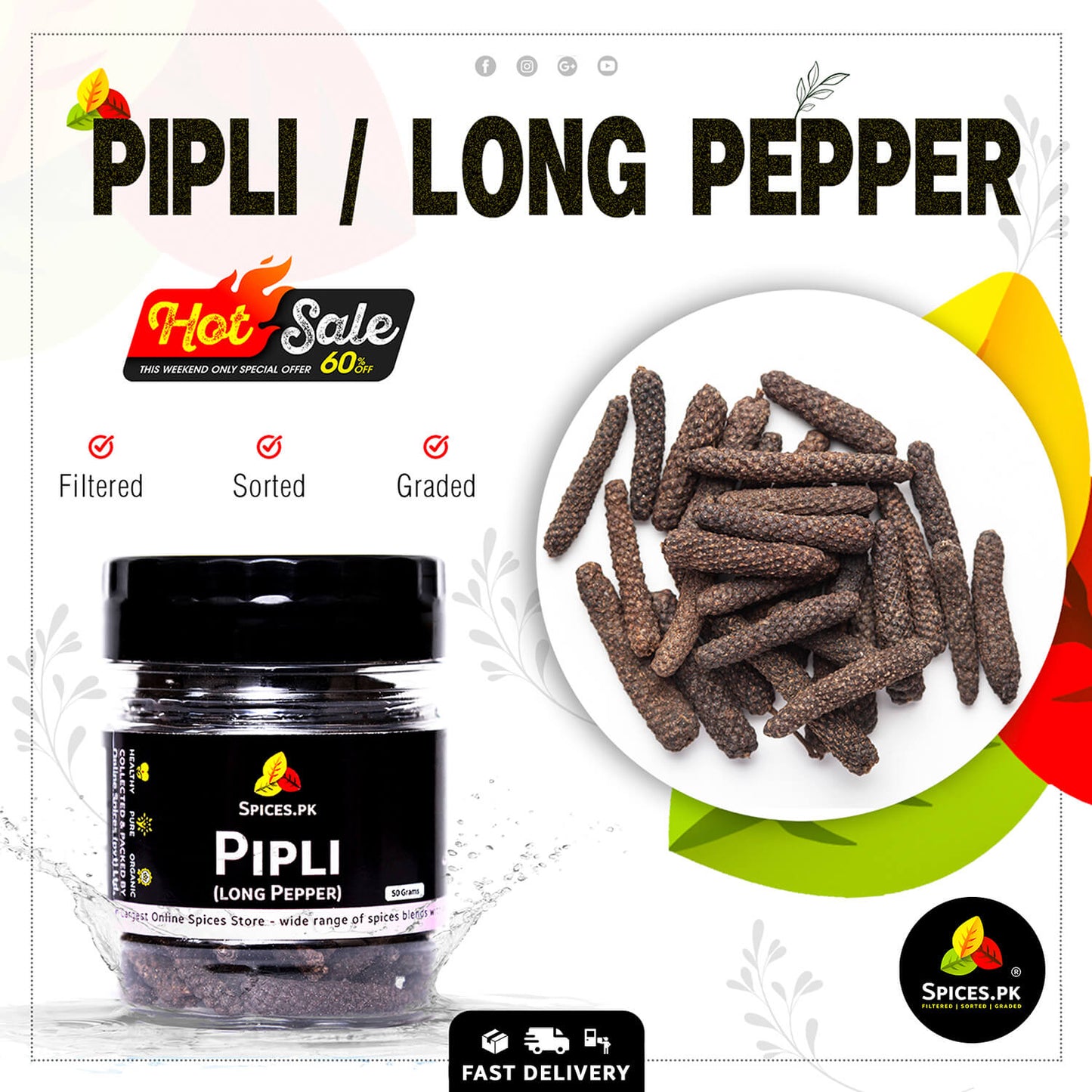
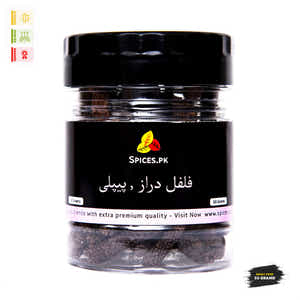
Premium Pipli – Filfil Daraz (مگھاں / Long Pepper) – Ayurvedic Respiratory & Digestive Support, Metabolic Boost for Weight Loss & Immunity
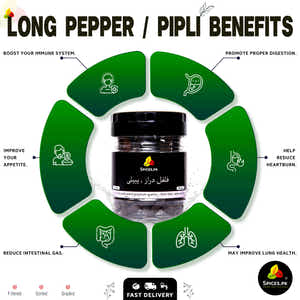
Welcome to Spices.pk, your most trusted source for 100% natural, chemical‑free spices and superfoods. Our premium Pipli – Long Pepper (مگھاں / Filfil Daraz / Pippali) is a slender, aromatic spice derived from the fruit of the Piper longum vine. Unlike black pepper, which is a single kernel, long pepper is a complete cone‑shaped spike filled with dozens of tiny fruits. Its complex flavour profile is intensely pungent, yet carries sweet, earthy, and slightly floral undertones – a depth that has made it one of the most prized spices in Ayurveda and Mughlai cuisine. In ancient texts like the Caraka Samhita, Pipli is celebrated for its ability to balance all three doshas. It is a primary ingredient in Trikatu, the classical Ayurvedic “three pungents” formula. Packed with the alkaloid piperine, as well as the unique compound piperlongumine, this spice acts as a powerful bioavailability enhancer. It helps the body absorb nutrients more efficiently, warms the digestive fire, stimulates metabolism to support weight management, clears phlegm for respiratory relief, and strengthens the immune system. From slow‑cooked nihari to spicy chai, Pipli is the secret ingredient that turns everyday cooking into powerful medicine.

Pipli (Long Pepper)
Why Choose Spices.pk Pipli (Long Pepper)?

What Is Pipli (مگھاں / Long Pepper)?
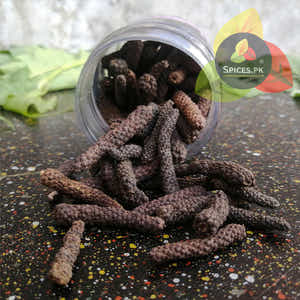
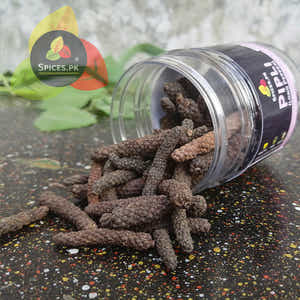
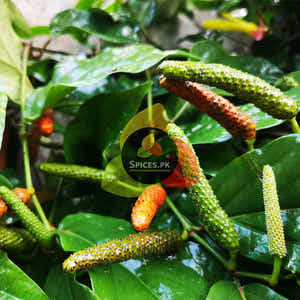
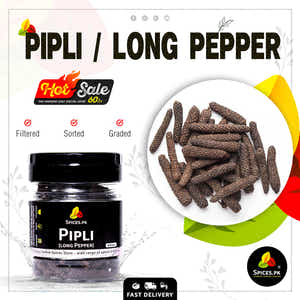
Pipli, also known as Long Pepper, Pippali, Filfil Daraz, or Maghān, is the dried fruit spike of the Piper longum vine – a close relative of the black pepper plant (Piper nigrum). While black pepper is a single dried berry, Pipli is an entire cone‑shaped inflorescence that can grow up to 5 cm long and is packed with dozens of tiny fruits attached to a central core. The name “Filfil Daraz” literally means “long pepper” in Persian, which is the common term for it in Pakistan. The spice has a distinctly complex flavour: it is pungent and spicy like black pepper, but with additional layers of warmth, sweetness, earthiness, and even subtle floral or cardamom‑like notes.
Chemically, Pipli contains a diverse array of bioactive compounds, including the alkaloid piperine (which gives both black and long pepper their heat), essential oils, resins, glycosides, eugenols, and the unique compound piperlongumine. These compounds are responsible for the spice’s anti‑inflammatory, antioxidant, antimicrobial, analgesic, and expectorant properties. Nutritionally, Pipli is used in very small quantities, so it is valued not for its macronutrients but for its powerful medicinal effects.
In the classical Ayurvedic text, the Caraka Samhita, Pipli is described as having the ability to kindle the digestive fire, clear excess phlegm, and act as a rejuvenative tonic for the lungs. It is one of the three ingredients in the famous formula “Trikatu” (the “three pungents”), along with black pepper and ginger. Together, they are used to stimulate digestion, enhance the absorption of other herbs, and reduce “ama” (toxins) in the body. In Unani medicine, which flourished in South Asia under the Mughal Empire, Pipli was similarly classified as having a “hot and dry” temperament, making it the ideal remedy for conditions caused by excess cold and moisture, such as asthma, bronchitis, and sluggish digestion. Whether used in the slow‑cooked Pakistani stew Nihari, in traditional chai, or as a powdered supplement, Pipli is a versatile and powerful spice that has stood the test of time.
A 5,000‑Year Legacy: The History of Pipli
The oldest known reference to long pepper comes from the ancient Indian textbooks of Ayurveda, where its medicinal and dietary uses are described in detail. It reached Greece in the 6th or 5th century BCE, where it was prized as a rare and expensive spice. In fact, long pepper was so highly valued in ancient Rome that the writer Pliny the Elder complained about its cost. Before black pepper became widely available through trade, long pepper was the preferred hot spice in Europe.
The plant is native to the Indo‑Malay region and grows wild in the tropical rainforests of India, Nepal, Sri Lanka, and the Philippines. In India, it is grown commercially in Assam and West Bengal, and to a smaller extent in Kerala, Karnataka, Tamil Nadu, and Uttar Pradesh. However, the bulk requirement is still derived from wild growth in Assam, Shillong, and West Bengal, as well as imports from Indonesia. In Pakistan, Pipli has been a cornerstone of traditional cooking and medicine for centuries, especially in the Mughlai cuisine of the north.
Pipli is the main spice of Nihari, a popular meat stew from the Indian metropolis of Lucknow, which is now considered one of the national dishes of Pakistan. The spice’s ability to tenderize meat and imbue it with a deep, warm heat is unsurpassed. Today, the global trade in long pepper is dominated by India, which accounts for an estimated 65% of exports. However, Indonesia, Malaysia, and Sri Lanka are also significant producers. In Pakistan, the spice is largely imported, though domestic cultivation does occur on a small scale. As consumers rediscover the benefits of traditional foods, Pipli is once again gaining the recognition it deserves as a true superfood of the ancient world.



































































































































اکثر پوچھے جانے والے سوالات


