



 Spices.pk
⚡ Accepted Payment Methods


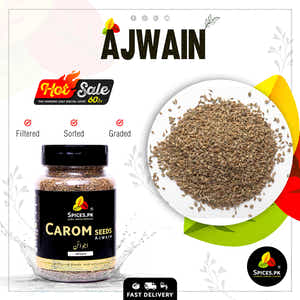
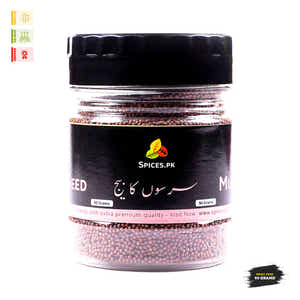
Premium Carom Seeds – Ajwain (اجوائن) – 15g Protein, 1034mg Calcium, 20.6g Fibre per 100g & Thymol Power for Digestion, Respiratory Relief & Weight Loss
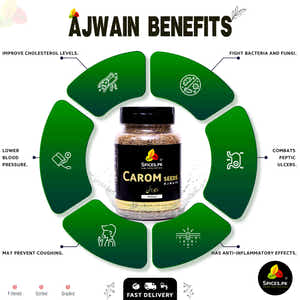
Welcome to Spices.pk, your most trusted source for 100% natural, chemical‑free spices and superfoods. Our premium Carom Seeds – Ajwain (اجوائن) are tiny, olive‑green to brown seeds derived from the Trachyspermum ammi herb, a member of the Apiaceae family native to Egypt and widely cultivated across India, Iran, Afghanistan, and Pakistan. Unlike ordinary spices, ajwain delivers a bold, thyme‑like, slightly bitter flavour profile that is instantly recognisable. Ajwain is rich in nutrients: 100g of these seeds provide 15g of protein, 1034mg of calcium (more than a glass of milk), 20.6g of dietary fibre, 13.65mg of iron, 1692mg of potassium, and 273mg of magnesium, all for just 357 calories. The beneficial effects of ajwain come from its high concentration of the compound thymol (35‑60% of its essential oil), which has antibacterial, antifungal, anti‑inflammatory, antioxidant, antispasmodic, and carminative properties. Ajwain can relieve gas, bloating, and indigestion, soothe respiratory conditions like asthma and bronchitis, boost metabolism to support weight loss, strengthen bones, and support liver and kidney health. Whether you are making ajwain paratha, dal pakwan, spicy pakoras, lentil curries, or simply boiling a teaspoon of seeds to make ajwain water, this humble seed is an essential addition to every Pakistani kitchen.

Carom Seeds (اجوائن)
Why Choose Spices.pk Ajwain (Carom Seeds)?

What Are Carom Seeds (Ajwain / اجوائن)?
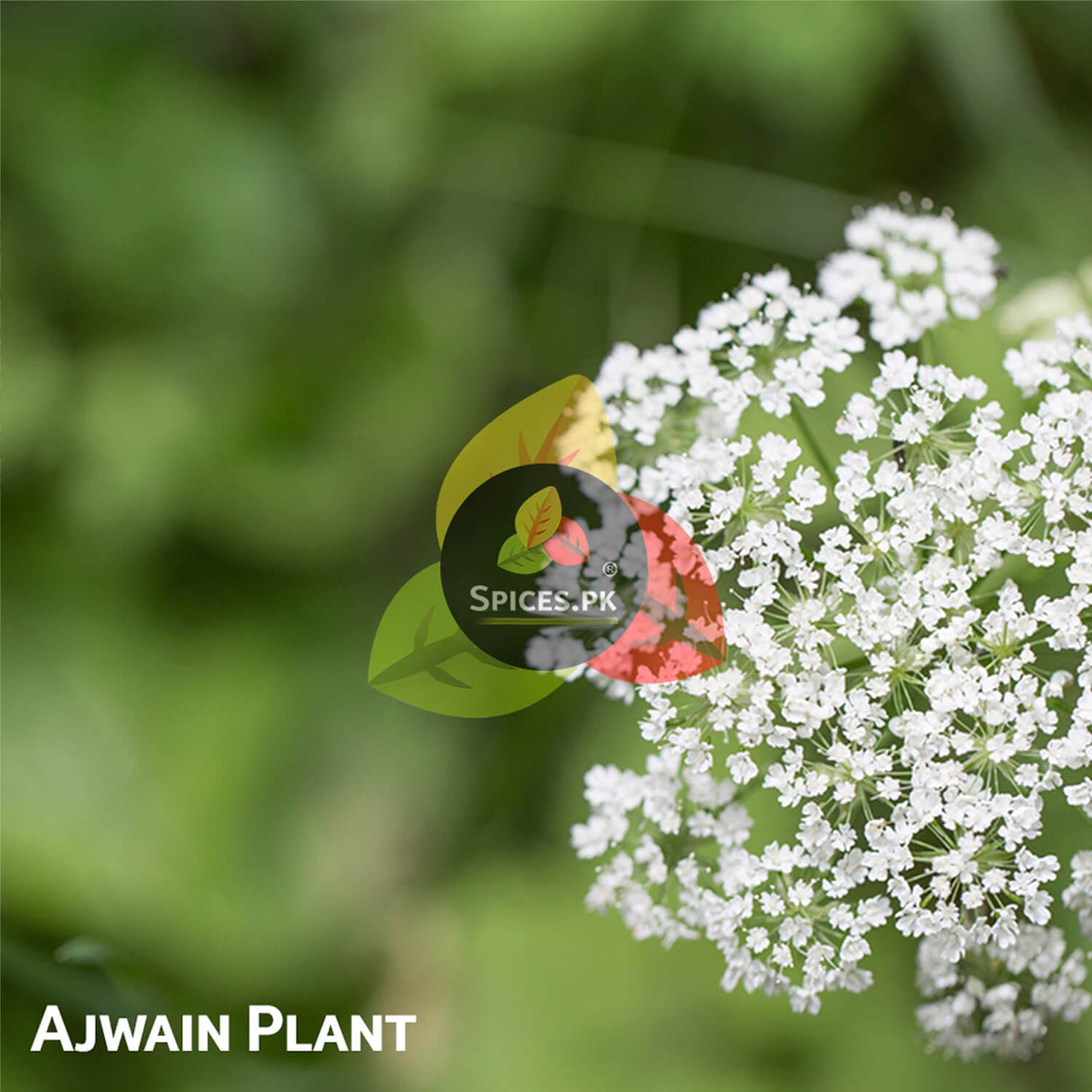
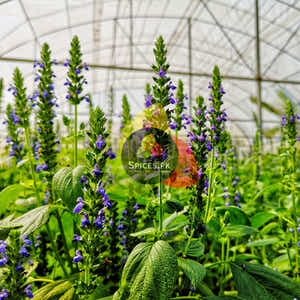
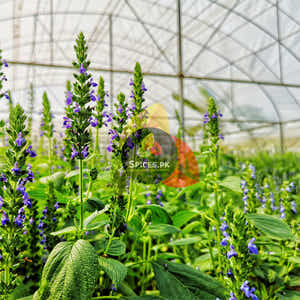
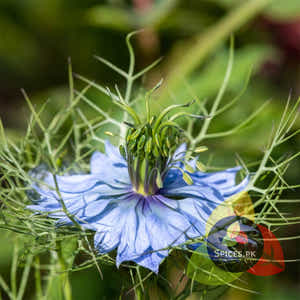
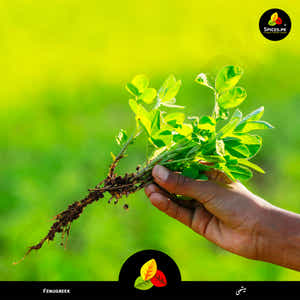
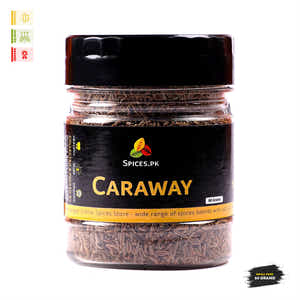
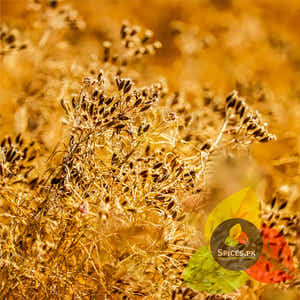
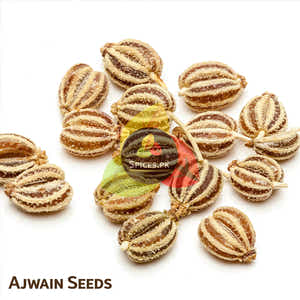
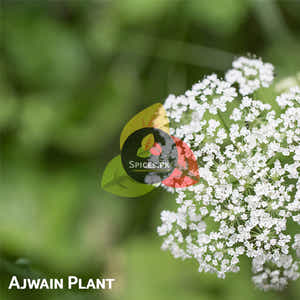
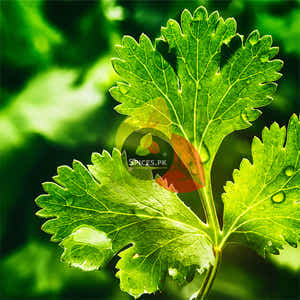
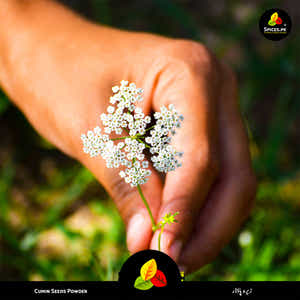
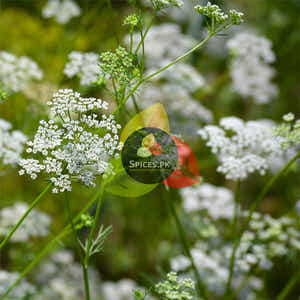
Ajwain, also known as carom seeds, ajowan caraway, bishop's weed, or omam, is a small, oval seed from the Trachyspermum ammi plant – an annual herbaceous plant in the Apiaceae family (the same family as carrots, celery, and parsley). Native to Egypt, ajwain now grows extensively across arid and semi‑arid regions of South Asia, the Middle East, and North Africa, particularly India, Iran, Afghanistan, Iraq, and Pakistan. The plant typically grows 60‑90 cm tall, with feathery leaves and compound umbels of small white flowers that develop into aromatic, ovoid, grey‑brown schizocarps – the seeds we use as spice.
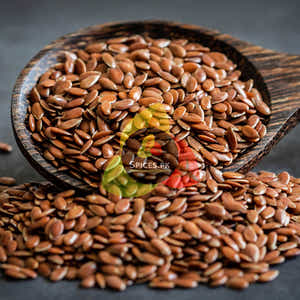
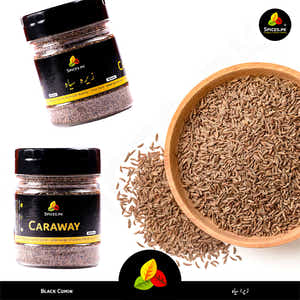
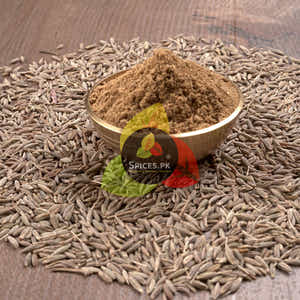
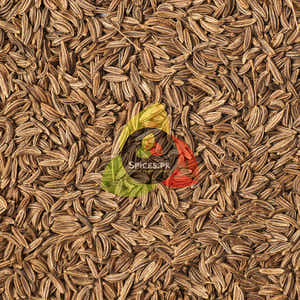
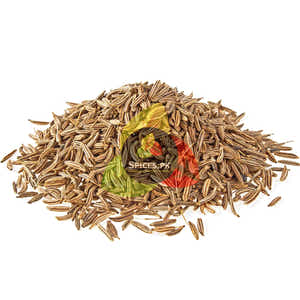
Visually, ajwain seeds are often mistaken for cumin or caraway, but they have a distinctly different flavour profile: bold, herbal, and slightly bitter with a strong thyme‑like aroma. This flavour comes from the seed's high concentration of essential oils, particularly thymol (which constitutes 35‑60% of the oil content), along with p‑cymene, γ‑terpinene, and other compounds. Nutritionally, 100 grams of seeds contain: 357 calories, 15g of protein, 20.6g of dietary fibre, 24.5g of carbohydrates, 0% cholesterol, 1034mg of calcium (103% of the recommended daily amount), 13.65mg of iron, 273mg of magnesium, 1692mg of potassium, 329mg of phosphorus, 5.67mg of zinc, 76.71mg of omega‑3 fatty acids, 124.33mg of vitamin A, and significant amounts of folate.
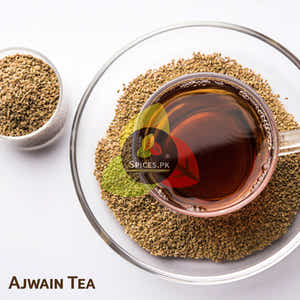
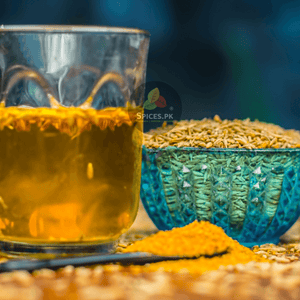
In South Asia, ajwain has been used for centuries as a spice in cooking and as a staple of traditional medicine. In Ayurveda, ajwain is believed to balance Vata and Kapha doshas while increasing Pitta. It is traditionally used to treat digestive disorders (flatulence, atonic dyspepsia, diarrhoea, abdominal pain, and indigestion), respiratory ailments (asthma, bronchitis, and common cold), and as a galactogogue to promote milk production in nursing mothers, an anthelmintic (to expel worms), and a diuretic. Modern Unani medicine similarly recognises ajwain (known as Nankhawah) for its carminative, antispasmodic, and stimulating properties. The seeds are often chewed raw after meals, roasted and mixed with other spices, or boiled in water to make a therapeutic tea. Even ajwain leaves have medicinal uses, though the seeds are the most potent part of the plant. With an export value of over USD 9.5 million from Pakistan alone in 2023, ajwain remains a globally significant spice and medicinal herb. At Spices.pk, we bring you the highest grade, hand‑cleaned ajwain seeds, packed fresh to preserve their natural essential oils.
A 5,000‑Year Legacy: The Ancient History of Ajwain
The history of ajwain stretches back at least five millennia. The plant (Trachyspermum ammi) is native to the Nile River region of Egypt, where it grew wild along the fertile banks. Ancient Egyptians used ajwain as a culinary spice and in their system of herbal medicine, as well as in the embalming process (thymol acts as a preservative). From Egypt, the cultivation of ajwain spread eastward along ancient trade routes to Persia (modern‑day Iran), Mesopotamia, and the Indian subcontinent. By the time of the Indus Valley Civilisation (2600‑1900 BCE), ajwain was already known in the region. Its arrival in the Indian subcontinent was accelerated during the Achaemenid and later the Mughal empires, when trade and cultural exchange between Persia and India reached its peak.
In the classical texts of Ayurveda (Charaka Samhita and Sushruta Samhita, dated to around 600‑300 BCE), ajwain is referred to by its Sanskrit names “Yavanak” or “Yavanika” – literally meaning “that which comes from the Greeks (Yavanas)” – reflecting its Mediterranean origin. The seeds were prized for their ability to kindle the digestive fire (Agni), expel gas, relieve colic, and treat respiratory congestion. In the Unani system, which flourished under the Mughal Empire, ajwain (known as “Nankhawah” or “Ajwain”) was classified as having a “hot and dry” temperament (Mizaj), making it ideal for conditions caused by excess cold or moisture, such as phlegmatic digestion and asthma. Unani physicians prescribed ajwain to treat flatulence, atonic dyspepsia, diarrhoea, abdominal tumours, piles, bronchial issues, lack of appetite, and amenorrhea.
Today, India is the world's largest producer and exporter of ajwain, accounting for nearly all global supply. Major production centres are the states of Gujarat (33.12%), Rajasthan (28.48%), and Madhya Pradesh (27.45%). Iran, Afghanistan, Pakistan, and Iraq also produce significant quantities. Pakistan's ajwain export industry, centred in the Punjab and Sindh provinces, generated over USD 9.5 million in export value in 2023, with top destination markets including the Middle East, Europe, and North America.








































































































































































Faqs


