Skip to product information
1 of 7
Daraz
Brand Logo Spices.pk
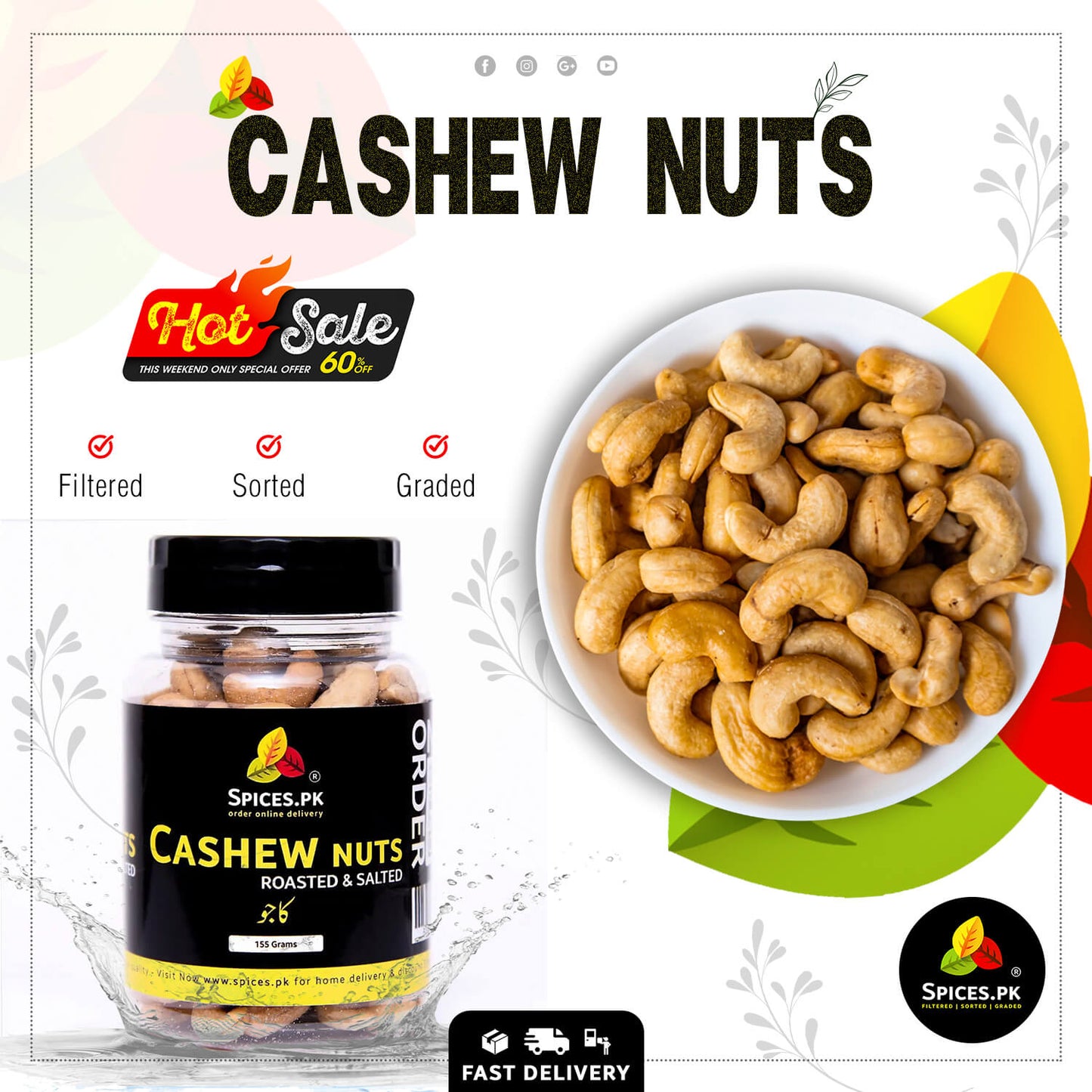
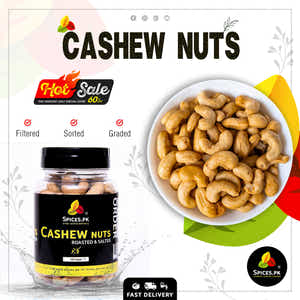
Roasted - Salted Kaju - Kajo - Anacardium Al Gharbi - Whole Cashew Nuts - Anacardium Occidentale Kernels
Cashew Nuts (کاجو)
Whole - Dry Fruits - Nuts
0 only
Trust & Payment — Enhanced Visuals
Free Shipping
Orders over 2000 PKR
Secure Payment
256-bit SSL & fraud protection
24/7 Support
via WhatsApp & chat

⚡ Accepted Payment Methods

  • Visa
  • Mastercard
  • PayPal
✅ Trusted by 10,000+ customers · PCI compliant
SKU: 51214087512142
Barcode: 51214087512142
View full details

Premium Cashew Nuts – Kaju (کاجو) – 100% Natural Whole Kernels for Heart Health, Weight Management & Glowing Skin

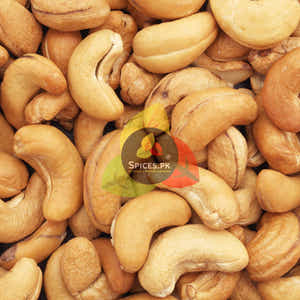
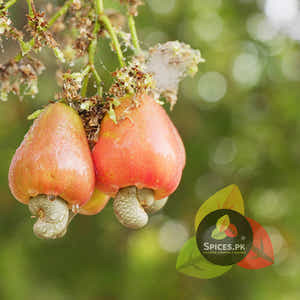
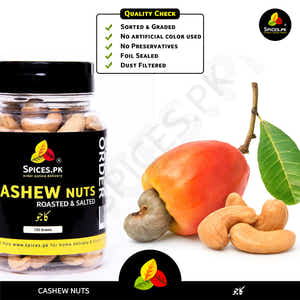
Welcome to Spices.pk, your most trusted source for 100% pure, chemical‑free dry fruits and superfoods. Our premium Cashew Nuts (Kaju – کاجو) are whole, unbroken kernels of the highest grade, sourced from the world's finest cashew‑growing regions and packed fresh in Pakistan. Unlike many dry fruits, cashews are not actually nuts – they grow attached to the bottom of the cashew apple, a fruit native to Brazil that now thrives in tropical climates across Africa and Asia. Rich in healthy fats, plant protein, and a powerful blend of antioxidants, each handful of our cashews is a nutritional powerhouse. The high copper and magnesium content supports strong bones, reduces inflammation, and improves brain function. Regular consumption of cashews helps lower bad cholesterol, supports healthy blood pressure, and provides sustained energy throughout the day. The antioxidants, including tocopherols and polyphenols, protect your cells from free radical damage, while the healthy fats and fibre keep you feeling full, making them an ideal snack for weight management. From classic salted snacks to creamy curries, our premium cashews are the perfect addition to your pantry, offering both gourmet flavour and profound health benefits.

Premium Cashew Nuts – Kaju – Whole Natural Kernels – Spices.pk

Cashews (Kaju)

Why Choose Spices.pk Cashew Nuts (Kaju)?

🌰100% Natural & Pure – No artificial colours, no preservatives, no added oils; premium W‑320 grade kernels
💪Rich in Magnesium & Copper (67% DV) – Supports bone health, nerve function, immunity, and healthy hair pigmentation
❤️Heart‑Healthy Fats – Monounsaturated and polyunsaturated fats help lower LDL cholesterol and reduce blood pressure
🩸High in Iron & Zinc – Helps prevent anaemia, supports immune function, and promotes glowing skin and strong hair
🕌Halal Certified – Pure, safe, and authentic for all households; perfect for snacking, cooking, and desserts
♻️Ethically Sourced & Freshly Packed – Sustainably sourced from top growers, hygienically packed in Pakistan for guaranteed freshness
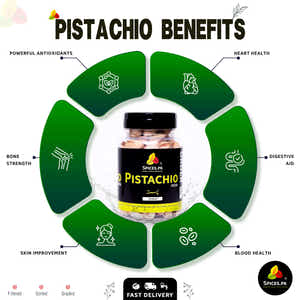
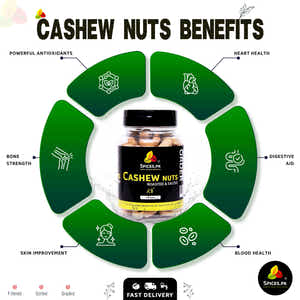
Health benefits of cashew nuts – heart health, weight management, bone strength, glowing skin – Spices.pk

What Are Cashew Nuts (Kaju / کاجو)?

Cashew nuts, known in Urdu as Kaju (کاجو), are the kidney‑shaped seeds that grow attached to the bottom of the cashew apple (Anacardium occidentale). Unlike true nuts which grow inside a hard shell, cashews are the seed of a drupe, surrounded by a thick, leathery shell that contains a toxic, caustic oil called urushiol – the same compound found in poison ivy. This oil is highly irritating to human skin and must be carefully removed through a heat treatment process before the kernel is safe to eat. This dangerous step, which involves roasting, steaming, or boiling the nuts, is one of the reasons cashews are almost never sold in the shell and why they are among the more expensive nuts on the market. The cashew tree is native to northeastern Brazil, where it grows wild and was first cultivated by indigenous peoples. During the 16th century, Portuguese traders introduced the tree to their colonies in India and Mozambique, and later to other parts of Africa and Asia. Today, the tree thrives in tropical climates around the globe, with the Ivory Coast, India, Vietnam, and Nigeria being the largest producers of raw cashew nuts. In Pakistani culture, cashews are called “Kaju” and are a beloved ingredient in both sweet and savoury dishes. They are a staple of the “dry fruit basket” offered to guests during weddings, Eids, and other festive occasions. Whether they are roasted and salted for an afternoon snack, ground into a creamy paste for curries (like Kaju Curry), or crushed to garnish the famous Kaju Katli sweet, cashews are an indispensable part of the Pakistani pantry.

Nutritionally, cashews are a dense source of energy and essential nutrients. A one‑ounce serving (about 28 grams or a small handful) provides 157 calories, 5g of plant protein, 12g of heart‑healthy fats, and 9g of carbohydrates. They are particularly rich in copper (providing 67% of the recommended daily intake), magnesium (20% DV), and zinc (15% DV). Cashews also contain significant amounts of iron, phosphorus, selenium, vitamin K, and B‑vitamins. Unlike many other nuts, cashews have a relatively high carbohydrate content, but their low glycemic index and high fibre content mean they do not cause sharp spikes in blood sugar levels.

A 500‑Year Journey: The History of Cashew Nuts

The history of the cashew nut is a story of globalisation, beginning in the rainforests of Brazil. The Tupi people, who inhabited the coastal regions of what is now northern Brazil, were the first to use the cashew tree. They understood the medicinal properties of the leaves, fruit, and bark and had mastered the art of roasting the nut to neutralise the toxic oil in its shell. The word “cashew” itself is believed to come from the Portuguese word “caju,” which was derived from the Tupi name “acajú.” In the 16th century, Portuguese colonisers recognised the potential of this strange, dual‑fruit tree, and they transported it across the Atlantic to their African colonies, particularly Mozambique. From Africa, the tree was further transported to the Indian subcontinent, eventually finding its ideal home in the coastal regions of Goa, Kerala, and Tamil Nadu. The tropical climate of India proved to be perfect for the cashew, and it flourished. By the 20th century, India had become the world's largest producer of raw cashew nuts and a global hub for processing the difficult kernel. The industry grew so large that it employed over two lakh (200,000) workers in the organised sector. For decades, the global cashew trade was dominated by Indian processing centres, but the balance of power has shifted dramatically in recent years. In the 21st century, West Africa emerged as the new centre of raw cashew production. The Ivory Coast (Côte d’Ivoire), which had first planted cashew trees in the late 20th century to combat soil erosion, overtook India and Vietnam to become the world's largest producer, harvesting an estimated 1.5 million tons of raw nuts in 2025. Today, Vietnam is the world's leading exporter of processed cashew kernels, while India remains a major processor and consumer of the nut. Pakistan is a net importer of cashews, relying largely on shipments from India, Vietnam, and African nations to meet the demand of its large, cashew‑loving population. The price of cashews in Pakistan can vary significantly. In 2025, market rates in major cities have fluctuated between Rs3,500 and Rs4,000 per kilogram for standard grades, with special varieties commanding even higher prices. Despite the high cost, the demand for this “royal nut” remains strong, a testament to its enduring popularity.

🏷️Traditional Names & Languages (South Asia)
  • 🇵🇰🇮🇳 Urdu / Hindi: کاجو / काजू (Kaju)
  • 🇮🇳 Sanskrit: काजू (Kājū)
  • 🇮🇳 Bengali: কাজু (Kaju) / কাজু বাদাম (Kaju Badam)
  • 🇮🇳 Punjabi: ਕਾਜੂ (Kājū)
  • 🇮🇳 Gujarati: કાજુ (Kāju)
  • 🇮🇳 Marathi: काजू (Kājū)
  • 🇮🇳 Tamil: முந்திரி (Muntiri)
  • 🇮🇳 Telugu: జీడిపప్పు (Jīḍipappu)
  • 🇮🇳 Kannada: ಗೋಡಂಬಿ (Gōḍambi)
  • 🇮🇳 Malayalam: കശുവണ്ടി (Kaśuvaṇṭi)
🌐Global Names & Botanical Classification
  • 🇬🇧 English: Cashew Nut / Cashew
  • 🌿 Botanical Name: Anacardium occidentale L.
  • 🌸 Family: Anacardiaceae (Cashew family)
  • 🇪🇸 Spanish: Marañón / Cajuil
  • 🇫🇷 French: Noix de cajou
  • 🇩🇪 German: Cashewkern
  • 🇮🇹 Italian: Anacardio
  • 🇨🇳 Chinese: 腰果 (Yāoguǒ)
  • 🇯🇵 Japanese: カシューナッツ (Kashūnattsu)
  • 🇷🇺 Russian: Кешью (Kesh'yu)
  • 🇦🇪 Arabic: الكاجو (Al‑Kājū)
📜Key Health & Nutritional Benefits
✔ Heart Health & Cholesterol: Rich in monounsaturated and polyunsaturated fatty acids, cashews help lower LDL cholesterol, reduce triglycerides, and support healthy blood pressure.
✔ Bone Strength: High in copper, magnesium, and phosphorus – copper is essential for maintaining the elasticity of bones and joints, while magnesium works alongside calcium to build bone structure.
✔ Weight Management: The combination of protein, fibre, and healthy fats increases satiety, reduces hunger cravings, and supports healthy weight when consumed in moderation.
✔ Blood Sugar Regulation: Cashews have a low glycemic index and are rich in magnesium, which helps improve insulin sensitivity and maintain stable blood glucose levels.
✔ Anaemia Prevention: Packed with iron, cashews help increase the production of red blood cells and prevent iron‑deficiency anaemia.
✔ Skin & Hair Health: Zinc, copper, and selenium contribute to glowing skin, reduce inflammation, and help maintain healthy hair pigmentation (preventing premature greying).
📌HEART HEALTH & CHOLESTEROL MANAGEMENT
Cashews are one of the best nuts for cardiovascular health. They are rich in oleic acid, the same heart‑healthy monounsaturated fat found in olive oil. The healthy fats in cashews help lower “bad” LDL cholesterol while maintaining “good” HDL cholesterol. This reduces the buildup of plaque in the arteries, lowering the risk of heart attacks and strokes. Studies have shown that people who regularly consume small amounts of cashews see a significant drop in total cholesterol levels within just a month.
📌BONE & JOINT HEALTH
Cashews are an excellent source of the mineral copper, which plays a vital role in maintaining the health of connective tissues, joints, and bones. Without enough copper, the body cannot replace damaged connective tissue or absorb collagen effectively. The high magnesium content in cashews also works in conjunction with calcium to ensure that your bones stay dense and strong, reducing the risk of osteoporosis.
📌WEIGHT MANAGEMENT & SATIETY
Despite being calorie‑dense, cashews are a powerful weight‑loss tool. The combination of protein and fibre keeps you feeling full for longer, preventing overeating and unhealthy snacking. The healthy fats in cashews also help regulate the hormones that control appetite. When you replace processed snacks with a handful of cashews, you naturally consume fewer calories throughout the day, making it easier to reach and maintain a healthy weight.
📌SKIN, HAIR & ANTI‑AGEING
The powerful antioxidants in cashews, such as selenium, copper, and vitamin E, protect the skin from free radical damage and the signs of premature ageing. The copper in cashews is also essential for the production of melanin, the pigment that gives hair and skin their colour. A diet rich in copper helps prevent premature greying of the hair and keeps the skin looking clear, bright, and youthful.
🗺️Top Producing Countries (Raw Cashew Nuts, 2025)
🇨🇮 Côte d'Ivoire (Ivory Coast) – world's largest producer, harvesting an estimated 1.5 million tons of raw cashew nuts in 2025. 🇮🇳 India – the traditional heartland of cashew production, with major growing regions in the Western Ghats. 🇻🇳 Vietnam – one of the world's largest producers of raw cashews and the number one global exporter of processed kernels. 🇳🇬 Nigeria – Africa's second largest producer. 🇹🇿 Tanzania – major East African producer, with cashew exports bringing in over 10% of the country's foreign exchange. 🇧🇷 Brazil – the original home of the cashew tree, still a significant producer. 🇬🇭 Ghana – emerging West African producer. 🇬🇼 Guinea‑Bissau – significant producer, often called the "Cashew Kingdom" of West Africa. 🌏 Total world production exceeds 5 million tons annually.
📤Top Exporters (Processed Cashew Kernels, 2025)
  • 🇻🇳 Vietnam – world's largest exporter of processed cashew kernels, with a massive processing industry that turns raw nuts from across Africa into edible white kernels.
  • 🇮🇳 India – second largest exporter, with a long history of cashew processing and a steady export market to the United States, the United Kingdom, the United Arab Emirates, and the Middle East.
  • 🇨🇮 Côte d'Ivoire – now a significant exporter of processed kernels, thanks to new government incentives for domestic processing.
  • 🇧🇷 Brazil – an established exporter of high‑quality cashews.
  • 🇹🇿 Tanzania – important exporter of raw and lightly processed cashews.
  • 🇳🇱 Netherlands – a major re‑export hub for cashews entering the European market.
  • 🇦🇪 UAE – a key re‑export hub for the Middle East and South Asian markets.
  • 🇵🇰 Pakistan – a net importer of raw and processed cashews, primarily from India, Vietnam, and the UAE. In 2025, the price of cashews in Pakistani markets ranged between Rs3,500 and Rs4,000 per kilogram.
Historical Background: From the Brazilian Rainforest to the Global Market
The story of the cashew nut begins in the rainforests of Brazil, where the Tupi people first harvested the nut from the “acajú” tree. They understood the medicinal properties of the plant and had mastered the dangerous task of removing the toxic shell. In the 16th century, Portuguese colonizers were fascinated by the plant and transported it across the Atlantic to their African colonies, particularly Mozambique. From there, the cashew travelled to the Indian subcontinent, where it found an ideal home in the coastal regions of Goa and Kerala. By the 20th century, India had become the world's largest processor and producer of cashews, a title it held for decades. In Pakistan, cashews (Kaju) became a staple of festive cuisine, especially in the form of Kaju Katli, a rich fudge made from cashew paste, and in creamy Kaju Curry. Today, the centre of production has shifted to West Africa, where the Ivory Coast now produces more raw cashews than any other country. The journey of the cashew is a powerful reminder of how global trade has transformed our relationship with food. From the Tupi people of ancient Brazil to a box of Kaju Katli on a table in Lahore, the cashew has truly been around the world.
✨ Spices.pk – Authenticity you can taste. Our Cashew Nuts (Kaju) are naturally rich in copper, magnesium, and healthy fats, ready to power your heart, your bones, and your day. Trust the original, trust Spices.pk. ✨
How to Use Cashew Nuts (Kaju) Pakistani Kitchen & Wellness Tips
🍽️
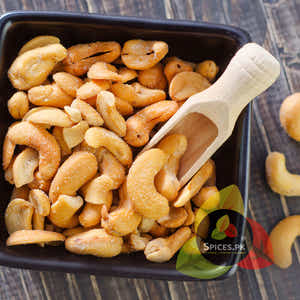
Healthy Daily Snack (صحت مند اسنیک): The simplest way to enjoy cashews is to eat them raw or dry‑roasted. Portion out a small handful (about 28g or 18 kernels) per day. Replace unhealthy biscuits or chips with this satisfying, crunchy snack to keep your energy levels stable and your hunger at bay.
🍲
Kaju Curry (Creamy Cashew Gravy) (کاجو کرری): Soak 1 cup of cashews in warm water for 30 minutes. Drain and blend with a small amount of water to form a smooth paste. In a pan, sauté onions, ginger‑garlic paste, and spices. Add your choice of vegetables or paneer, then stir in the cashew paste and simmer until the gravy becomes rich and creamy. This dairy‑free curry is a popular North Indian and Pakistani dish.
🍰
Kaju Katli (Traditional Sweet) (کاجو کٹلی): Grind cashews into a fine powder. In a pan, combine the cashew powder with sugar and a little water, cooking until the mixture forms a soft dough. Roll the dough into a thin layer on a greased surface, let it cool, and cut into diamond shapes. This is the most famous cashew‑based sweet, often given as a gift during festivals and weddings.
🥛
Homemade Cashew Milk (Dairy‑Free Alternative): Soak 1 cup of cashews in water for 4‑6 hours. Drain and rinse the cashews, then place them in a blender with 4 cups of fresh water. Blend on high for 2‑3 minutes until completely smooth. Strain the milk through a nut milk bag or a fine mesh sieve. Use this creamy, non‑dairy milk in your coffee, smoothies, or cereal.
🍕
Cashew "Cheese" (Vegan Cream Cheese): Soak 2 cups of cashews overnight. Drain and rinse. Place the cashews in a blender with ½ cup of water, 2 tablespoons of lemon juice, 2 tablespoons of nutritional yeast, and a pinch of salt. Blend until completely smooth and creamy. This is a delicious, dairy‑free substitute for cream cheese or sour cream, perfect for spreading on bagels or dolloping onto tacos.
🧊
Storage Tip (ذخیرہ کرنے کا طریقہ): Store cashews in an airtight container in a cool, dark cupboard. For long‑term storage (up to 6 months), keep them in the refrigerator or freezer. The high oil content of cashews means they can become rancid if exposed to heat, light, or air. If stored properly, they will retain their fresh, buttery flavour.
📦 Ingredients: 100% Natural Whole Cashew Kernels (Anacardium occidentale). No additives, no preservatives, non‑GMO, gluten‑free, vegan, halal.
🚚 Order now for fast delivery across Pakistan – from Spices.pk, your premium organic spice & superfood store.
Spices.pk tree
Spices.pk | Premium Spices Banner – Desktop Only

Faqs

Collapsible content

✅ Are your spices 100% organic and pure?
Absolutely! We source directly from organic farmers in Pakistan and abroad. All our products – from Organic Turmeric Powder (Haldi) to Black Seeds (Kalonji) – are certified organic, no artificial colours, no preservatives, and no fillers. We regularly test for purity and heavy metals.
💰 Do you offer Cash on Delivery (COD) in Pakistan?
Yes! We offer Cash on Delivery to all cities in Pakistan, including Karachi, Lahore, Islamabad, Rawalpindi, Faisalabad, Multan, Peshawar, Quetta, and even remote areas. COD is free – you pay only when you receive your order.
🚚 How long does shipping take?
We process orders within 24 hours (except Sunday/holidays). Major cities: 2‑3 business days. Other cities: 3‑5 business days. Remote areas: up to 7 business days. You'll receive a tracking number via SMS/email once shipped.
🔄 What is your return / refund policy?
If you receive a damaged or wrong product, contact us within 7 days of delivery. We'll arrange a replacement or full refund (no extra cost). For unopened, resalable items you can return within 7 days (buyer pays return shipping). Refunds processed in 5‑7 business days.
📦 Can I buy spices in bulk or wholesale?
Yes! We supply hotels, restaurants, bakeries, and online resellers. For wholesale pricing on 1kg, 5kg, or 25kg packs, email us at contact@spices.pk or use our contact form. We also offer custom private labelling.
🌟 What makes your spices different from local market spices?
Most local market spices contain fillers or artificial colours. We provide single‑origin, lab‑tested spices with full traceability. Our Red Chilli Powder is 100% pure without brick powder or dye. Our Cinnamon Sticks have high essential oil content – you can taste the difference.
🔒 Is your packaging resealable and hygienic?
Yes! All our spices come in food‑grade, BPA‑free stand‑up pouches with zip‑lock. This keeps your spices fresh for months and prevents spilling. The packaging also includes batch number, expiry date, and storage instructions.
🌍 Do you ship internationally?
Currently we ship only within Pakistan (including AJK and Gilgit‑Baltistan). We plan to launch international shipping soon. For international customers, please ask a friend/relative in Pakistan to order on your behalf.
💳 Which payment methods do you accept?
We accept Cash on Delivery, credit/debit cards (Visa, Mastercard, Amex), EasyPaisa, JazzCash, and bank transfer for bulk orders. All online payments are PCI‑compliant – your card data is never stored on our servers.
🕌 Are your products Halal certified?
Yes – 100% Halal. We do not use any alcohol‑based processing, gelatin, or non‑halal ingredients. Many of our spices (e.g., Gond Katira, Kalonji) are used in traditional Islamic medicine. Halal certificate available on request.
🧴 How should I store spices to keep them fresh?
Store in a cool, dark, dry place (avoid above stove or near window). Keep the zip‑lock sealed. Whole spices last up to 2 years; ground spices best within 6‑8 months. Never use a wet spoon – moisture ruins them.
🍲 Do you sell whole spices, powders, or both?
We sell both! For each spice we usually offer whole, powder, and sometimes crushed/flakes. Check the product dropdown for options. Whole spices last longer; powders are more convenient.
Skip Details