



 Spices.pk
⚡ Accepted Payment Methods


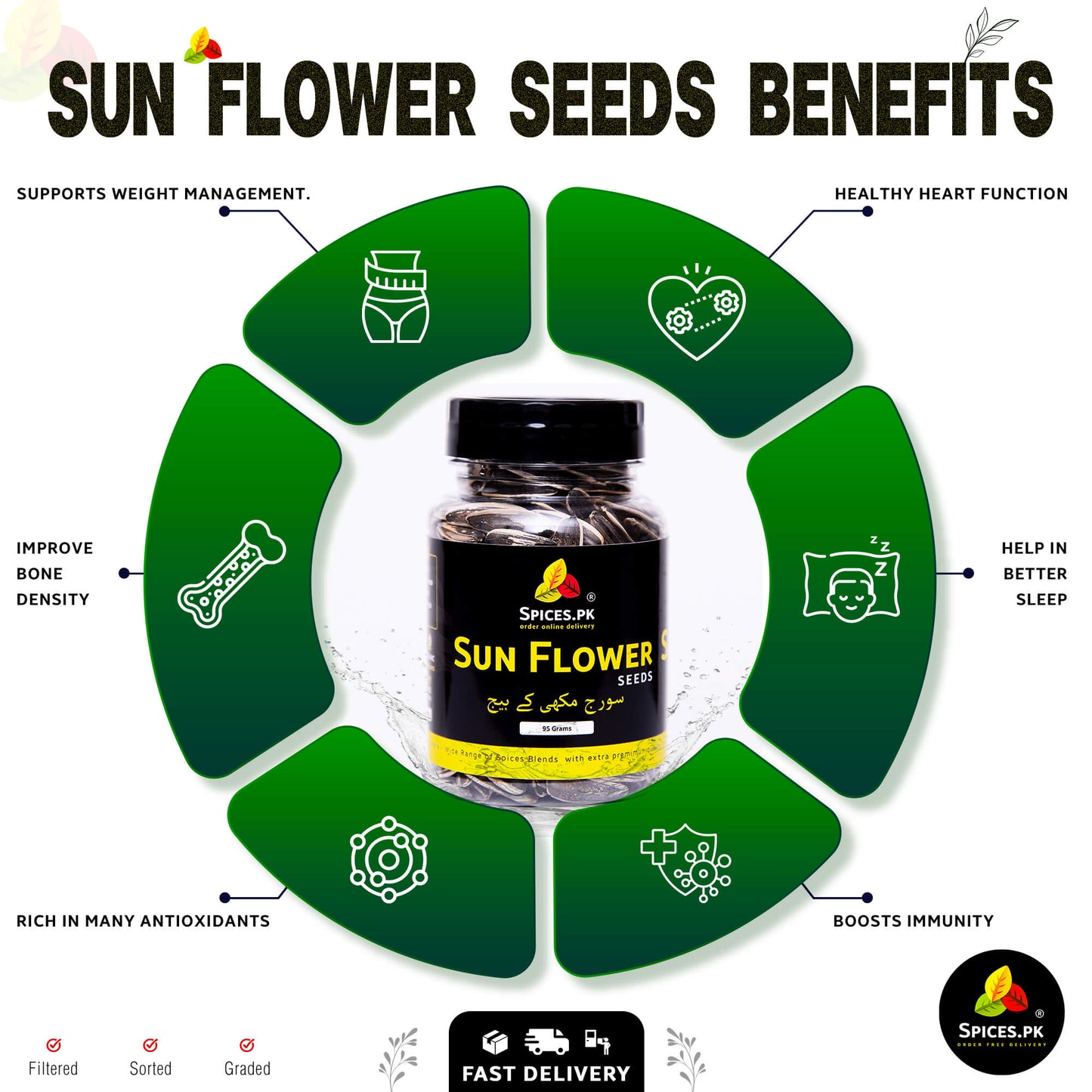
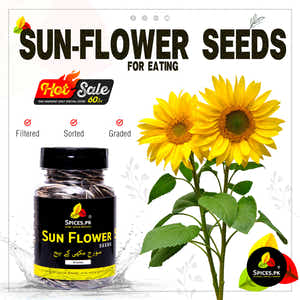
Premium Sunflower Seeds – Surajmukhi Beej (سورج مکھی کے بیج) – Rich in Vitamin E, Selenium, Zinc & Healthy Fats for Heart Health, Immunity & Glowing Skin
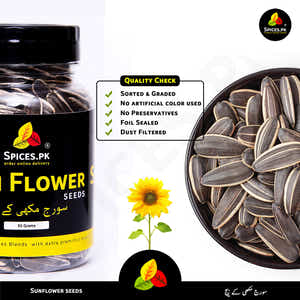
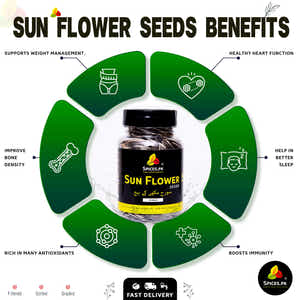
Welcome to Spices.pk, your most trusted source for 100% natural, chemical‑free superfoods. Our premium Sunflower Seeds – Surajmukhi Beej (سورج مکھی کے بیج) are hulled kernels harvested from the cheerful sunflower (Helianthus annuus), a plant that has been cultivated for thousands of years. Sunflower seeds are tiny nutritional powerhouses, packed with healthy fats (14g per ounce), plant protein (5.5g), and an exceptional array of vitamins and minerals. A single serving delivers 49% of the daily value of vitamin E, 41% of selenium, and 14% of zinc – nutrients that work together to support your heart, boost your immune system, and keep your skin glowing[reference:0]. Sunflower seeds are also one of the highest plant‑based sources of phytosterols, natural compounds that help lower LDL cholesterol[reference:1]. Whether you enjoy them raw as a snack, roasted with a pinch of salt, sprinkled over salads, or blended into smoothies, these versatile seeds are a delicious way to upgrade your daily nutrition. Sourced from the finest growers and packed fresh in Pakistan, our sunflower seeds are halal, gluten‑free, and completely free from artificial additives.

Sunflower Seeds
Why Choose Spices.pk Sunflower Seeds (Surajmukhi Beej)?

What Are Sunflower Seeds (Surajmukhi Beej / سورج مکھی کے بیج)?
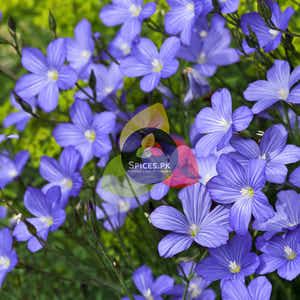
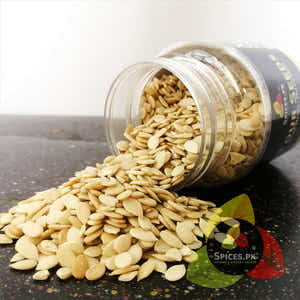
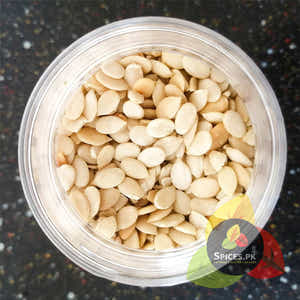
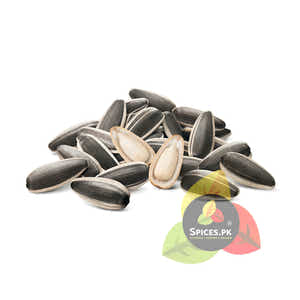
Sunflower seeds, known in Urdu as Surajmukhi Beej (سورج مکھی کے بیج) or Helianthus Seeds, are the edible kernels harvested from the large flower head of the sunflower plant (Helianthus annuus). These small, teardrop‑shaped seeds are encased in a hard black‑and‑white striped shell (hull), which is typically removed before consumption. The hulled kernel is light grey, almost white, with a distinct teardrop shape and a subtle, nutty flavour. A single sunflower head can contain up to 2,000 seeds[reference:5]. Sunflower seeds are among the most popular seeds in the world, enjoyed as a snack, used in cooking and baking, and pressed into sunflower oil – one of the most widely used cooking oils globally[reference:6].
Nutritionally, sunflower seeds are a remarkable source of vitamins, minerals, and healthy fats. According to the USDA, one ounce (about 28g or a small handful) of dry‑roasted sunflower seed kernels provides 165 calories, 14g of total fat (of which the vast majority is heart‑healthy unsaturated fat), 5.5g of plant protein, 7g of carbohydrates, and 3g of dietary fibre[reference:7][reference:8]. They are particularly rich in vitamin E (7.4mg, 49% DV), selenium (22.5mcg, 41% DV), copper (0.5mg, 56% DV), manganese (0.6mg, 30% DV), pantothenic acid (2mg, 40% DV), and folate (67mcg, 17% DV)[reference:9]. Sunflower seeds also contain significant amounts of zinc, magnesium, phosphorus, iron, and B‑vitamins. They are naturally cholesterol‑free and low in sodium when unprocessed[reference:10].
A 5,000‑Year Legacy: The History of Sunflower Seeds
The history of the sunflower is deeply rooted in the Americas. Native Americans have been using wild sunflowers for food and medicine for at least 8,000 years[reference:11]. Archaeological evidence suggests that sunflowers were first domesticated around 2300 B.C., possibly even earlier than the famous "Three Sisters" crops of corn, beans, and squash[reference:12]. Indigenous tribes roasted the seeds and ground them into a fine meal for baking or to thicken soups and stews. They also pressed the seeds to extract oil for cooking and hair treatments, and used the hulls to make a coffee‑like beverage[reference:13].
The sunflower was introduced to Europe by Spanish explorers in the 16th century, where it was initially grown as an ornamental curiosity[reference:14]. Its potential as an edible oil crop was largely overlooked until it reached Russia. There, the Holy Orthodox Church forbade the consumption of many oil‑rich foods during Lent. The sunflower, being a "new" plant, was not restricted, and it was enthusiastically adopted as a source of oil[reference:15]. Russians developed high‑oil varieties and became the world's leading sunflower producers. In 1966, an open‑pollinated Russian cultivar was introduced to the United States, sparking the beginning of large‑scale commercial production in North America[reference:16].
In Pakistan, sunflower seeds have become increasingly popular in recent years. While Pakistan is not a major global producer of sunflower seeds (producing approximately 39,000‑42,000 tonnes annually), it has a thriving domestic market. The seeds are imported from countries like China ($4.78M), Australia ($1.69M), South Africa ($459k), and Bulgaria ($304k)[reference:17]. The demand for hulled sunflower seeds as a healthy snack has grown significantly in urban centres, as more people recognise the value of seed‑based nutrition. Today, sunflower seeds are a beloved snack in Pakistan, enjoyed on their own, added to chaats, sprinkled over salads, and incorporated into trail mixes.
































































































































Faqs


