Skip to product information
1 of 5
Live!
Brand Logo Spices.pk
Tattri - Khatta - Pissa Tatri - Hamd Al Laymoon - Citric Acid Crystals - Acidum Citricum - lime powder - lemon powder - Sour Salt
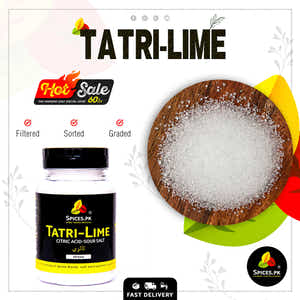
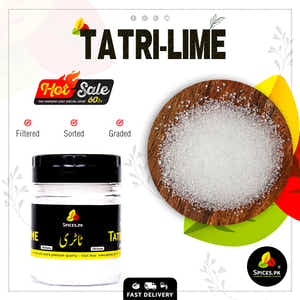
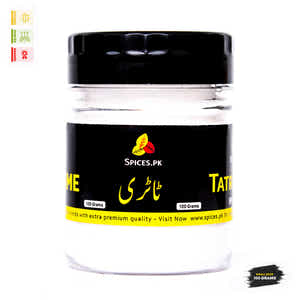
Tatri - Sour Salt (ٹاٹری)
Pansar - Powder - Salt
0 only
Trust & Payment — Enhanced Visuals
Free Shipping
Orders over 2000 PKR
Secure Payment
256-bit SSL & fraud protection
24/7 Support
via WhatsApp & chat

⚡ Accepted Payment Methods

  • Visa
  • Mastercard
  • PayPal
✅ Trusted by 10,000+ customers · PCI compliant
SKU: 51214079512142
Barcode: 51214079512142
View full details

Premium Tatri – Citric Acid (ٹاٹری) – Natural Souring Agent, Food Preservative & Household Descaler

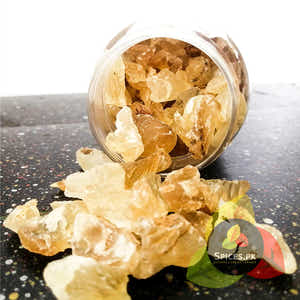
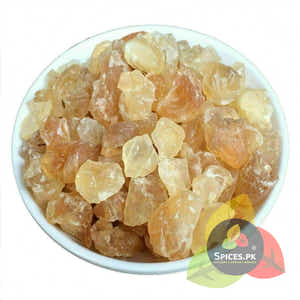
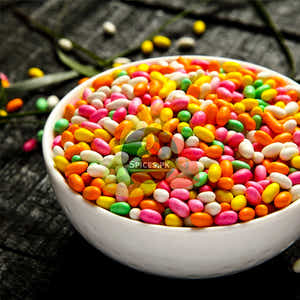
Welcome to Spices.pk, your most trusted source for 100% natural, chemical‑free food essentials. Our premium Tatri (Citric Acid – ٹاٹری / نیمبو کا پھول / Tatrii Dana) is a fine, white crystalline powder derived naturally from citrus fruits like lemons and limes. Prized for its sharp, sour taste, Tatri is the essential ingredient behind the perfect “khatta pani” for gol gappas, the irresistible tang of chaat, the crispness of jalebis, and the soft, spongy texture of dhokla. Beyond cooking, it acts as a powerful natural preservative, preventing spoilage and extending the shelf life of homemade jams, pickles, and chutneys. Tatri is also used to curdle milk for fresh, soft paneer and to activate baking soda in baked goods. As an eco‑friendly household cleaner, it effectively removes lime scale from kettles, coffee machines, and bathroom fittings. Packed fresh in Pakistan, our Tatri is food‑grade, halal, and free from any artificial additives – ready to bring the perfect balance of sour to every dish.

Premium Tatri – Citric Acid – Natural Souring Agent & Food Preservative – Spices.pk

Tatri - Sour Salt (ٹاٹری)

Why Choose Spices.pk Tatri (Citric Acid)?

🍋100% Natural & Pure – Derived from citrus fruits, no artificial colours, no preservatives, no additives
🌿Powerful Natural Preservative – Extends shelf life of jams, pickles, chutneys, and canned goods; prevents spoilage and oxidation
🧂Concentrated Sour Power – Adds consistent, pure tartness without adding liquid; perfect substitute for lemon juice or tamarind
🧽Effective Household Descaler – Removes lime scale, hard water stains, and rust from kettles, kitchenware, and appliances
🕌Halal Certified – Pure, safe, and authentic for all households; essential for Pakistani cooking and home remedies
♻️Ethically Sourced & Freshly Packed – Food‑grade quality, hygienically packed in Pakistan for guaranteed freshness
Natural souring agent, preservative, and descaler – Tatri citric acid benefits – Spices.pk

What Is Tatri (Citric Acid / ٹاٹری)?

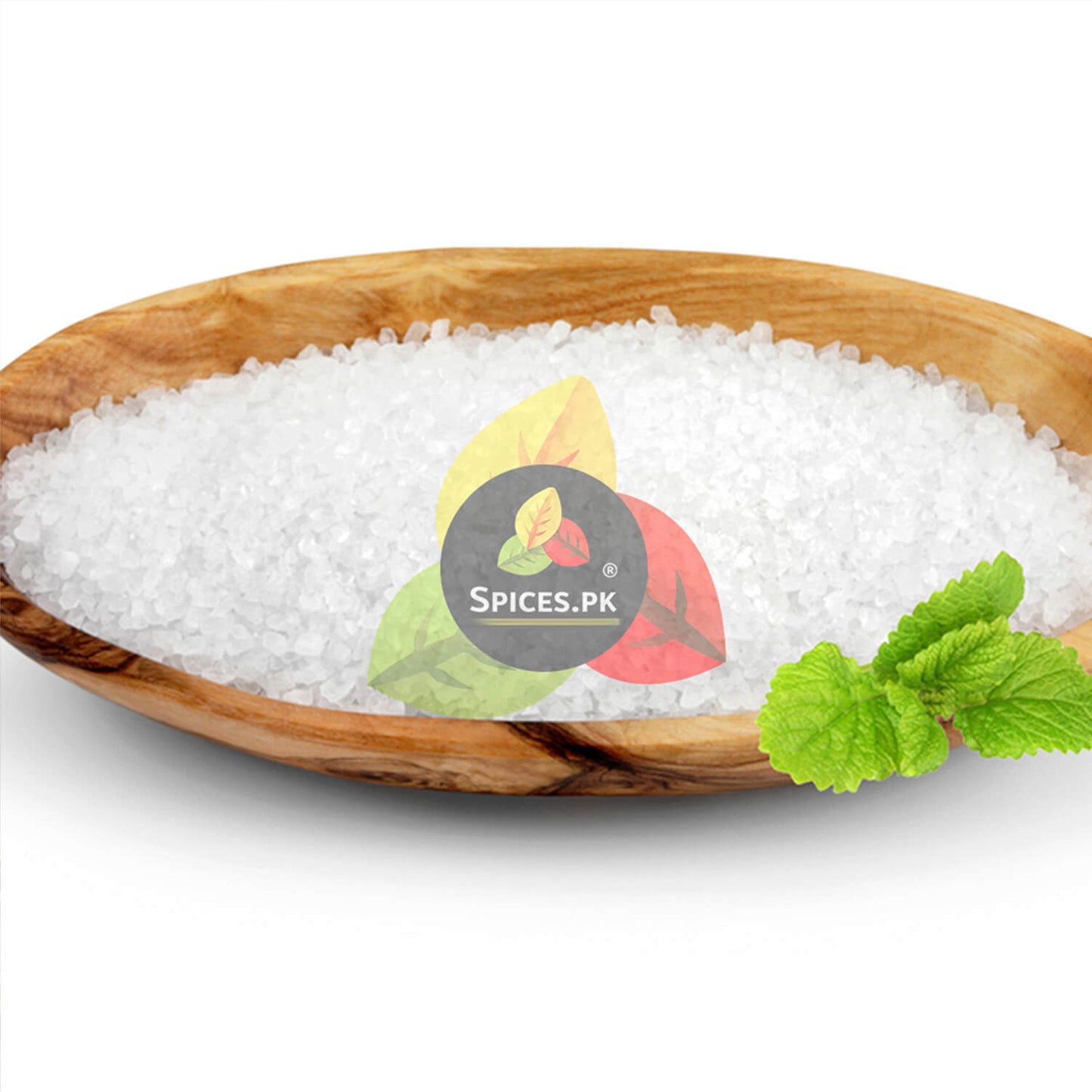
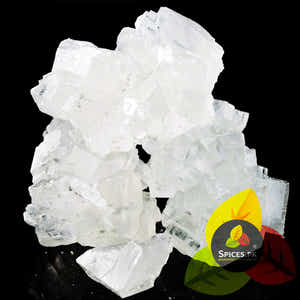
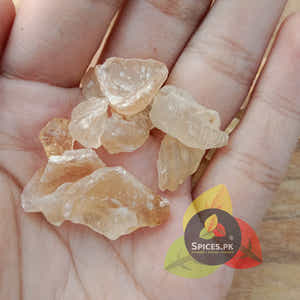
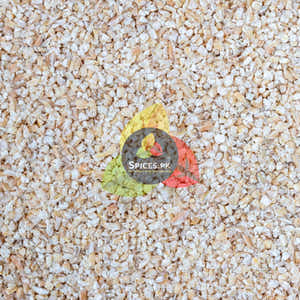
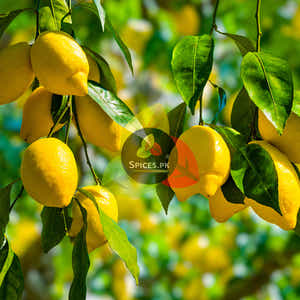
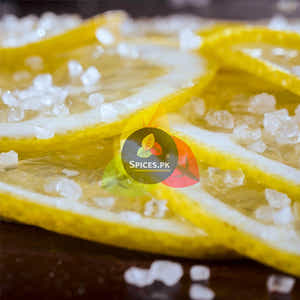
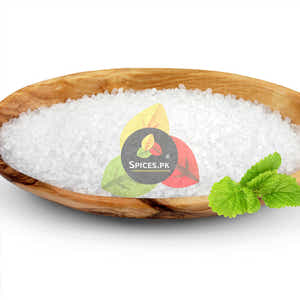
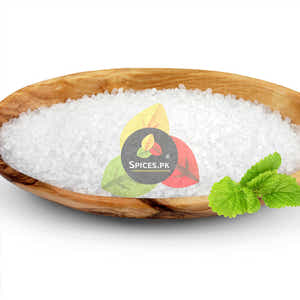
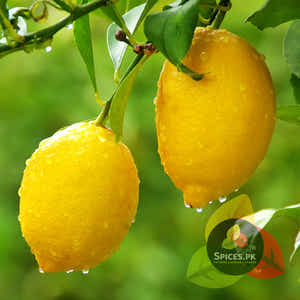
Tatri, also known in South Asia as Citric Acid, Nimbu ka Phool (نیمبو کا پھول), Nimbu Sat (نیمبو ست), or Tatrii Dana (ٹاٹری دانہ), is a weak organic acid that occurs naturally in citrus fruits, especially lemons and limes. In its commercial form, it is a fine, white crystalline powder that looks similar to salt but has a much more intense, mouth‑puckering, sour taste. The word “Tatri” comes from the Urdu and Hindi word for sourness or acidity, perfectly describing its primary function in the kitchen.

Chemically, citric acid is a tricarboxylic acid with the formula C6H8O7, meaning each molecule contains three carboxyl groups (‑COOH). This chemical structure makes it extremely effective at lowering the pH of solutions (increasing acidity), chelating (binding) metal ions, and acting as a natural preservative. The sour taste that we associate with lemons and limes is caused almost entirely by the citric acid they contain.

The use of citric acid in South Asian kitchens is deeply traditional. It is the essential ingredient behind the “khatta” (sour) flavour in countless street foods and home recipes. A few crystals dissolved in water instantly transform into a tangy pani for gol gappas. A pinch added to the batter makes jalebis crisp and dhoklas soft and airy. A teaspoon of Tatri in homemade jam, murabba, achar, or chutney ensures that it stays fresh for months without any artificial preservatives. It is the preferred souring agent for making fresh, soft paneer (cottage cheese), replacing traditional methods that use buttermilk or lime juice. The convenience is that Tatri provides a predictable, consistent, and highly concentrated sour flavour without altering the water content or colour of the dish.

Beyond cooking, Tatri is a versatile household helper. Its chelating properties make it a powerful and eco‑friendly descaler, perfect for removing lime scale buildup from kettles, kitchen sinks, bathroom taps, and hard water stains. The global market for citric acid has been valued at around US$ 2 billion in 2025 and is estimated to grow to nearly US$ 2.55 billion by 2032, driven by its widespread use in food processing, pharmaceuticals, and cleaning products. However, in Pakistan, the true value of Tatri lies in its ability to bring authentic, natural sourness to the foods that define our culture.

A Journey from Ancient Lemons to Modern Pakistani Kitchens

The history of Tatri (citric acid) is as old as civilisation itself. For centuries, people have known about the unique sour taste of citrus fruits, and the Arabian alchemist Jabir ibn Hayyan (Geber) is believed to have first identified citric acid as a distinct substance in the 9th century. However, it was not until 1784 that the Swedish‑German chemist Carl Wilhelm Scheele successfully isolated citric acid in its pure crystalline form from lemon juice. He achieved this by adding lime (calcium hydroxide) to the juice to precipitate calcium citrate, and then treating it with sulphuric acid to release the citric acid. For nearly 150 years, citric acid was produced by this expensive method, using imported Italian lemons, which meant it remained a rare and costly ingredient.

The breakthrough came in the early 20th century when scientists discovered that a common black mould, Aspergillus niger, could produce huge quantities of citric acid by feeding on cheap sugar. By 1919, American chemist James Currie had perfected the industrial fermentation process, which is still the standard method used today. The vast majority of the world’s citric acid is now produced through this fermentation of molasses or corn starch, not by squeezing lemons.

In Pakistan, the journey of Tatri followed the nation’s history. During the colonial era, citric acid was a luxury import. After independence, as local industries grew and imports became more accessible, citric acid became a common item in general stores and kiryana shops. It was enthusiastically adopted by Pakistani home cooks who understood its value – a small bottle of Tatri could replace dozens of fresh lemons, offering a consistent and long‑lasting source of sourness. Today, from the dhabas of Peshawar to the food streets of Lahore and the high‑rise apartments of Karachi, a small jar of Tatri remains an indispensable tool for making chaat, chutney, nimbu paani, and countless other traditional dishes.

🏷️Traditional Names & Languages (South Asia)
  • 🇵🇰🇮🇳 Urdu / Hindi: ٹاٹری / टाटरी (Tatri / Tatrii) / نیمبو کا پھول (Nimbu ka Phool) / نیمبو ست (Nimbu Sat) / ٹاٹری دانہ (Tatrii Dana)
  • 🇮🇳 Sanskrit: साइट्रिक अम्ल (Citric Aml)
  • 🇮🇳 Bengali: সাইট্রিক এসিড (Saitrik Esid) / টাটি (Tati)
  • 🇮🇳 Punjabi: ਟਾਟਰੀ (Tāṭrī)
  • 🇮🇳 Gujarati: ટાટરી (Tāṭrī)
  • 🇮🇳 Marathi: टाटरी (Tāṭarī)
  • 🇮🇳 Tamil: சிட்ரிக் அமிலம் (Ciṭrik Amilam)
  • 🇮🇳 Telugu: సిట్రిక్ యాసిడ్ (Siṭrik Yāsiḍ)
  • 🇮🇳 Kannada: ಸಿಟ್ರಿಕ್ ಆಸಿಡ್ (Siṭrik Āsiḍ)
  • 🇮🇳 Malayalam: സിട്രിക് ആസിഡ് (Siṭrik Āsiḍ)
🌐Global Names & Chemical Composition
  • 🇬🇧 English: Citric Acid / Sour Salt / Lemon Salt
  • 🧪 Chemical Formula: C6H8O7 (tricarboxylic acid)
  • 🔬 Chemical Name: 2‑Hydroxypropane‑1,2,3‑tricarboxylic acid
  • 🇪🇸 Spanish: Ácido cítrico
  • 🇫🇷 French: Acide citrique
  • 🇩🇪 German: Citronensäure
  • 🇮🇹 Italian: Acido citrico
  • 🇨🇳 Chinese: 柠檬酸 (Níngméng suān)
  • 🇯🇵 Japanese: クエン酸 (Kuen san)
  • 🇷🇺 Russian: Лимонная кислота (Limonnaya kislota)
  • 🇦🇪 Arabic: حامض الستريك (Hāmiḍ al‑Sitrīk)
📜Key Nutritional & Functional Benefits
✔ Natural Preservative: Prevents the growth of mould, fungus, and bacteria by lowering the pH of foods, extending shelf life without artificial chemicals.
✔ Powerful Souring Agent: Provides a clean, sharp, and consistent sourness without adding any liquid or altering the colour of the dish.
✔ Antioxidant Properties: Helps protect food from oxidation and spoilage, keeping colours bright and flavours fresh.
✔ pH Balancer: Used to adjust and stabilise the pH in jams, jellies, cheese making, and other food preparations.
✔ Chelating Agent: Binds with metal ions, making it effective for removing lime scale, hard water stains, and rust from kitchen appliances.
📌THE ULTIMATE SOURING AGENT FOR PAKISTANI DISHES
Tatri is the perfect replacement for lemon juice or tamarind in any recipe. A pinch of this concentrated powder can instantly transform a simple dal, curry, or sauce with a clean, sharp sourness. For gol gappa pani, it provides that distinctive, mouth‑watering tang. In nimbu paani, a few crystals deliver a consistent, refreshing sourness. Tatri is also the essential ingredient for making jalebis and dhokla, helping to achieve the perfect texture and taste.
📌HOME PRESERVATION & PICKLING ESSENTIAL
For generations, Tatri has been the secret to long‑lasting homemade preserves. Adding it to achar (pickles), murabbas (fruit preserves), chutneys, and homemade sauces prevents the growth of harmful bacteria and mould. It also stops cut fruits and vegetables from turning brown (oxidation), keeping their colour and flavour vibrant.
📌BAKING & CHEESE MAKING
Tatri is used to curdle milk to make fresh, soft paneer (cottage cheese). Unlike vinegar, which can leave a residual taste, Tatri provides a clean separation. It is also used as a leavening agent when combined with baking soda to create carbon dioxide gas, resulting in light, airy baked goods.
📌HOUSEHOLD CLEANING & DESCALING
Tatri is a natural and eco‑friendly powerhouse for cleaning around the house. Its chelating properties bind to calcium and lime scale, making it easy to remove buildup from kettles, coffee machines, kitchen sinks, bathroom taps, and showerheads. A simple solution of Tatri and water can also be used to remove rust stains and brighten stainless steel.
🗺️Top Producing Countries (Citric Acid, 2025)
🇨🇳 China – world's largest producer, accounting for approximately 70% of global fermentation capacity. Major Chinese producers include RZBC Group, TTCA Co., Weifang Ensign Industry, and Cofco Biochemical. 🇺🇸 United States – major producer with companies like Cargill Inc. and Archer‑Daniels‑Midland Company (ADM). 🇫🇷 France – home to Jungbunzlauer and Citrique Belge. 🇧🇪 Belgium – Citrique Belge, a key European producer. 🇬🇧 United Kingdom – Tate & Lyle is a historic and major manufacturer. 🇨🇦 Canada – significant production facilities. 🇮🇳 India – a growing producer, with plants in Andhra Pradesh and Gujarat. The top five global players control around 49% of the market share. Today, over 99% of manufactured citric acid is produced through fermentation using the black mould fungus Aspergillus niger.
📤Top Exporters (Citric Acid, 2024‑2025)
  • 🇨🇳 China – largest global exporter, supplying the majority of the world’s needs; export value is influenced by global demand and US tariff policies.
  • 🇺🇸 United States – major exporter, especially to Canada, Mexico, and European markets.
  • 🇧🇪 Belgium – key European hub for Citrique Belge’s exports.
  • 🇫🇷 France – significant exporter of high‑quality citric acid.
  • 🇬🇧 United Kingdom – exports from facilities like Tate & Lyle.
  • 🇨🇦 Canada – smaller but notable exporter.
  • 🇮🇳 India – growing exporter to South Asia, Africa, and the Middle East.
  • 🇵🇰 Pakistan – does not produce citric acid but relies entirely on imports from China, India, and Europe. The import price has fluctuated significantly, from around USD 5 to USD 23 per kg depending on market conditions, before stabilising.
Historical Background: From the 9th Century to the Pani Puri Wallah
The journey of Tatri (citric acid) began in the 9th century when the Arabian alchemist Jabir ibn Hayyan (Geber) is believed to have discovered it. However, it remained a scientific curiosity for centuries. In 1784, Swedish chemist Carl Wilhelm Scheele became the first person to isolate pure citric acid, crystallising it from lemon juice. For the next 135 years, all citric acid was produced from imported Italian lemons, making it an expensive and rare item. In 1917, an American chemist, James Currie, discovered that the black mould Aspergillus niger could produce citric acid efficiently from sugar. This discovery revolutionised production, making citric acid affordable and abundant. In Pakistan and India, citric acid – known as Tatri – quickly became a staple, prized for its long shelf life and consistent sourness. It is the unsung hero behind many of our favourite street foods: it gives gol gappa pani its irresistible kick, chaat its balanced tang, jalebis their signature crispness, and paneer its perfect softness. Today, a small bottle of Tatri is a must‑have in any Pakistani kitchen, a testament to a chemical compound that travelled from alchemist laboratories to the heart of our culinary culture.
✨ Spices.pk – Authenticity you can taste. Our Tatri (Citric Acid) is food‑grade, halal, and ready to bring perfect sourness to your cooking, freshness to your preserves, and shine to your home. Trust the original, trust Spices.pk. ✨
How to Use Tatri (Citric Acid) Pakistani Kitchen & Household Tips
🍽️
Gol Gappa / Pani Puri Pani (گول گپے کا پانی): The authentic sourness in this famous chaat water comes from Tatri. Dissolve ½ teaspoon of citric acid powder in 2 litres of chilled water. Add mint, coriander, green chillies, chaat masala, black salt, tamarind paste, and a pinch of jaggery. Blend, strain, and chill. This gives the pani the perfect, consistent tang.
🥛
Fresh Paneer (Cottage Cheese) (پنیر): Heat 1 litre of full‑cream milk until it comes to a boil. Reduce the heat and slowly add 1 teaspoon of Tatri (citric acid) dissolved in 2 tablespoons of warm water. Stir gently. The milk will instantly separate into curds and whey. Strain through a muslin cloth, rinse with cold water, and press. This produces the softest, freshest paneer.
🍰
Jalebi & Dhokla Batter (جلیبی اور دھوکلہ): For crisp jalebis and soft, spongy dhokla, the acid in Tatri is essential. Add a pinch of Tatri directly to the flour batter. It reacts with baking soda to produce carbon dioxide bubbles, which create the honeycomb texture in jalebis and the light, fluffy, steamed cake texture of dhokla.
🍓
Jams, Murabbas & Pickles (جام، مربے اور اچار): To extend the shelf life of homemade preserves, add 1 teaspoon of Tatri to every 500g of fruit or vegetable when cooking. The citric acid lowers the pH, naturally preventing the growth of mould and bacteria. It also stops cut apples, bananas, and other fruits from turning brown.
🧽
Natural Descaler for Kettles & Coffee Machines (الیکٹرک کیٹل میں): For a chemical‑free way to remove lime scale, fill your kettle halfway with water, add 2 tablespoons of Tatri, and boil. Let it sit for 30‑40 minutes, then pour out the solution. Rinse the kettle thoroughly with fresh water. For sinks and taps, make a paste of Tatri and water, apply to the stain, leave for 10 minutes, then scrub and rinse.
🧊
Storage Tip (ذخیرہ کرنے کا طریقہ): Store Tatri in an airtight glass or plastic container in a cool, dry cupboard away from moisture. Keep away from direct sunlight. Do not refrigerate. Properly stored, citric acid powder can last for 2‑3 years without losing its potency.
📦 Ingredients: 100% Pure Food‑Grade Citric Acid (C6H8O7). No additives, no preservatives, non‑GMO, gluten‑free, vegan, halal.
🚚 Order now for fast delivery across Pakistan – from Spices.pk, your premium organic spice & culinary store.
Achar Ingredients, achar recipe, acidulant, Acidulant Food, anti browning agent, antioxidant preservative, best tatri pakistan, Buy Citric Acid Pakistan, Buy Tatri Online, Chatpata Masala, cheese making, Cheese Making Ingredients, Chinese Cooking Spices, Citric Acid, Citric Acid 250 Grams, citric acid anhydrous, Citric Acid Crystals, citric acid for cleaning, citric acid for hair, citric acid for skin, Citric Acid Powder, clean label, Cleaned Tatri, Cooking Ingredients, descaler, Descaling Powder, Desi Spices, dhokla recipe, e330, eco friendly cleaner, exfoliant, Filtered Tatri, food additive, Food Grade Acid, Food Grade Citric Acid, Food Preservatives, fruit chaat recipe, fruit preserve, gluten free, gol gappa pani recipe, Grocery Delivery Islamabad, Grocery Delivery Karachi, Grocery Delivery Lahore, halal citric acid, hard water stain remover, homemade jam, Household Cleaning Citric Acid, indian souring agent, islamabad citric acid, jalebi recipe, karachi tatri, Khana Banane Ki Spices, kitchen cleaner, lahore tatri, leavening agent, Lemon Acid, lemon juice alternative, Lemon Salt, multan citric acid, murabba recipe, natural household cleaner, natural preservative, Natural Sour Salt, natural souring agent, nimbu ka phool, Nimbu Ka Sat, Nimbu Phool, no additives, Organic Tatri, pakistani kitchen essential, paneer making, paneer recipe, peshawar tatri, pH balancer, pH regulator, Pickle Preservative, Premium Tatri, Preservative Powder, Pure Citric Acid, quetta citric acid, rawalpindi tatri, remove lime scale, rust remover, sour salt, Sour Seasoning, spice.pk, spices.pk, Spices.pk Tatri, Taatri, tamarind alternative., Tangy Flavor, Tartaric Acid Alternative, tartaric acid replacement, Tatri, Tatri 250g, tatri benefits, tatri for chaat, tatri for chutney, tatri for descaling, tatri for dhokla, tatri for gol gappa, tatri for jalebi, tatri for jams, tatri for murabba, tatri for nimbu paani, tatri for paneer, tatri for pickles, Tatri Powder, Tatri Price in Pakistan, tatri uses, tatrii dana, traditional souring agent, vegan, vinegar replacement, White Tatri Crystals, Wholesale Spices Pakistan, ٹاٹری
Spices.pk tree

Faqs

Collapsible content

Shipping

Available all over pakistan & Azad Kashmir

Payments

Online Payments & Cash on Delivery Available

Skip Details