Skip to product information
1 of 6
Live!
Brand Logo Spices.pk
Bahi Ka Murabba - Murabba Bahi - Murabba Al Safarjal - Quince Preserve - Cydonia Oblonga Fruit Preserve - Bihi - Metha Murabba - Safarjal
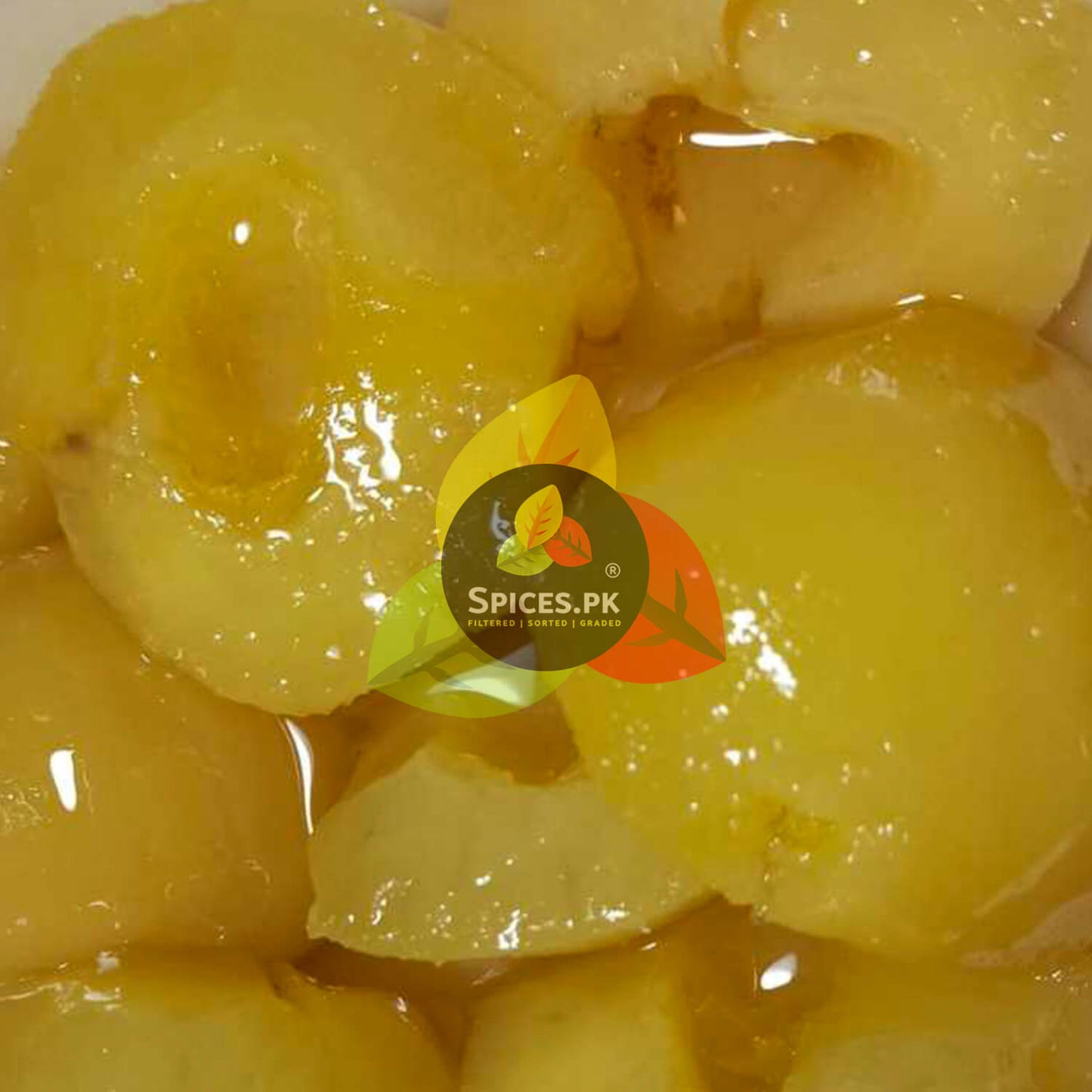
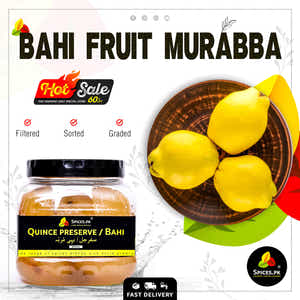
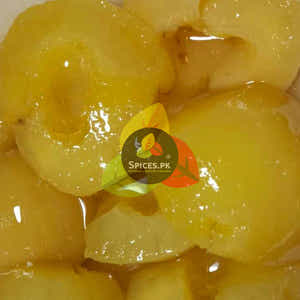
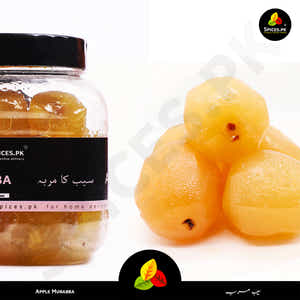
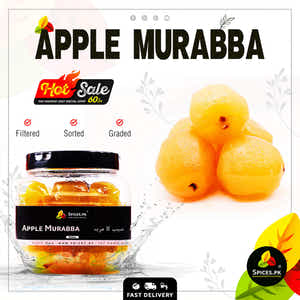
Quince Preserve - Bahi Murabba (بہی کا مربہ)
Pansar - Sweets
0 only
Trust & Payment — Enhanced Visuals
Free Shipping
Orders over 2000 PKR
Secure Payment
256-bit SSL & fraud protection
24/7 Support
via WhatsApp & chat

⚡ Accepted Payment Methods

  • Visa
  • Mastercard
  • PayPal
✅ Trusted by 10,000+ customers · PCI compliant
SKU: 51214129512143
Barcode: 51214129512143
View full details

Premium Quince Preserve – Bahi Murabba (بہی کا مربہ) – Traditional Winter Superfood for Heart Health, Digestion & Immunity | 100% Natural

Welcome to Spices.pk, your most trusted source for 100% natural, chemical‑free traditional foods and superfoods. Our premium Quince Preserve – Bahi Murabba (بہی کا مربہ / Safarjal Murabba / Bihi Murabba) is a traditional sweet preserve made from the golden aromatic fruit of the quince tree (Cydonia oblonga), which has been cultivated across the mountains of Central Asia and the subcontinent for over 4,000 years. According to Tibb‑e‑Nabvi (Prophetic Medicine), the Holy Prophet Muhammad (PBUH) advised eating quince because it prevents heart‑related diseases and is very beneficial in treating them. A quince preserve is a concentrated storehouse of vitamin C, dietary fibre (nearly 1.9g per 100g), calcium, iron, copper, zinc, and a high concentration of potent antioxidants. It acts as a powerful natural remedy for strengthening the heart and improving circulation, supporting digestion and relieving acidity, easing GERD in pregnancy, soothing coughs and throat infections, and strengthening the immune system. Whether you eat a spoonful after heavy meals to aid digestion, start your morning with it on a paratha, or use it as a natural sweetener in your tea, our authentic Bahi Murabba brings the timeless healing wisdom of Tibb‑e‑Nabvi and Ayurveda directly to your kitchen. Made from premium quinces grown in Pakistan's highland valleys and prepared through traditional sun‑drying and slow cooking methods, our murabba is halal, gluten‑free, and completely free from artificial colours, preservatives, and additives.

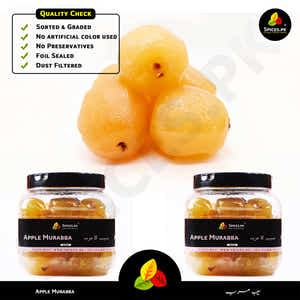
Premium Quince Preserve – Bahi Murabba – Traditional Winter Superfood – Spices.pk

Quince Preserve (بہی مربہ)

Why Choose Spices.pk Quince Preserve (Bahi Murabba)?

🍏100% Natural & Pure – No artificial colours, no preservatives, no additives; traditional slow‑cooked preserve
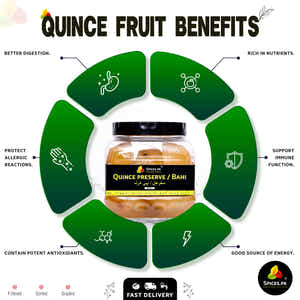
❤️Heart Health Superfood – Strengthens heart muscles, improves circulation, and helps prevent cardiovascular diseases
💪Rich in Vitamin C & Antioxidants – Boosts immunity, fights free radicals, and protects cells from damage
🫀Digestive & Gastric Relief – Soothes acidity, relieves indigestion, and acts as a natural remedy for GERD and nausea
🕌Halal Certified – Pure, safe, and authentic for all households; recommended in Tibb‑e‑Nabvi
♻️Ethically Sourced & Freshly Packed – Sustainably grown in Pakistan's temperate regions, hygienically prepared and packed
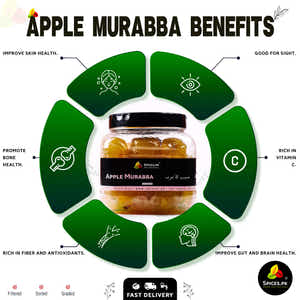
Health benefits of Bahi Murabba – heart health, digestive aid, immunity booster, traditional medicine – Spices.pk

What Is Quince Murabba (بہی کا مربہ / Safarjal Murabba)?

Quince Murabba, known in Urdu as Bahi Ka Murabba (بہی کا مربہ) or Safarjal Murabba, is a traditional sweet fruit preserve made from the quince fruit (Cydonia oblonga), a close relative of apples and pears. The quince tree is native to the Hyrcanian forests south of the Caspian Sea, with secondary centres of origin in Central Asia, including Uzbekistan, Tajikistan, Iran, Armenia, Azerbaijan, Georgia, Pakistan, Kashmir, and Afghanistan. From that centre of origin, it was spread radially by Neolithic farmers around 5000 to 3000 BC to secondary centres including Turkey, Syria, and the Mediterranean region. Quince is one of the oldest cultivated fruits known to humanity, with a history spanning over 4,000 years.

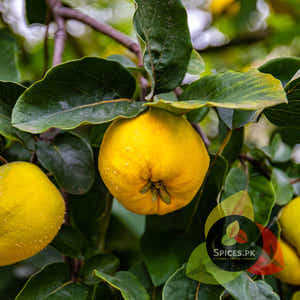
The quince fruit is hard, tart, and astringent when raw, with a characteristic bright golden‑yellow colour when ripe. It is larger than many apples, weighing as much as 1 kilogram (2.2 lb), often pear‑shaped but sometimes roughly spherical. The flesh is aromatic but remains hard, with gritty stone cells dispersed through the flesh, which is why quinces are almost never eaten raw. Instead, they are processed into jams, preserves (murabba), quince cheese, or added to savoury dishes. The making of murabba is a traditional method of preservation that involves cooking the fruit in sugar syrup, often with added spices like cardamom, cloves, or cinnamon, until the fruit becomes translucent and the syrup thickens.

In South Asia, quince has been cultivated for centuries, particularly in the temperate upland areas of Balochistan, Khyber Pakhtunkhwa, and Kashmir. It is known by several names: Bahi (بہی) in Urdu, Safarjal (سفرجل) in Arabic and Persian, and Bihi in some regions. The tradition of making Bahi Murabba is especially strong in Pakistan, where it is prepared during the winter months when quinces are in season. The preserve is valued not only for its sweet, aromatic taste but also for its powerful medicinal properties, as documented in both Tibb‑e‑Nabvi (Prophetic Medicine) and Ayurveda.

A 4,000‑Year Legacy: The History of Quince and Bahi Murabba

The history of the quince is deeply intertwined with the history of human civilisation. The fruit was known in ancient Mesopotamia and is believed to be the "golden apple" of Greek mythology that Paris awarded to Aphrodite. The word for quince in ancient Greek was used to signify teenage breasts, indicating its cultural significance. Quince was highly prized in ancient Rome, where it was used in cooking, medicine, and perfumery. The Romans introduced it to Europe, where it became a staple of medieval cuisine.

In the Islamic world, quince has a special place in Tibb‑e‑Nabvi (Prophetic Medicine). A famous hadith narrated by Hadrat Jabir, one of the Prophet Muhammad's (PBUH) companions, records that the Prophet advised eating quince because it prevents many heart‑related diseases and is very beneficial in treating them. The Prophet is also reported to have said, "Eat quince, for it sweetens the heart." This Prophetic endorsement elevated the quince to a status of great honour in Muslim societies, and it has been used for centuries as a remedy for heart ailments, digestive disorders, and respiratory conditions. Research conducted by Muhammad Nazar Yousaf, a Research Assistant at Dr Nazir Hussain Research Centre (DNHRC) in Pakistan, has compiled a research‑based book highlighting the immense health benefits of Bahi or quince, based on Tibb‑e‑Nabvi. Even a university in the UK has approved and declared that the contents of this fruit are very good for the cardio‑vascular system.

In the Indian subcontinent, quince has been cultivated since ancient times. The tree is native to the region, growing wild in the mountainous areas of northern Pakistan, Kashmir, and Afghanistan. During the Mughal era, quince was a prized fruit in the royal gardens and was used to prepare elaborate preserves and desserts for the emperors. The tradition of making Bahi Murabba became a staple of winter kitchens, a way to preserve the fruit's goodness for the cold months when fresh produce was scarce. Today, quince is still grown in the temperate upland areas of Balochistan, Khyber Pakhtunkhwa, and Gilgit‑Baltistan. The fruit is harvested in late autumn and early winter, and homemade Bahi Murabba is still prepared in many households, a cherished tradition passed down through generations.

🏷️Traditional Names & Languages (South Asia)
  • 🇵🇰🇮🇳 Urdu / Hindi: بہی (Bahi) / بہی کا مربہ (Bahi Ka Murabba) / سفرجل (Safarjal)
  • 🇮🇳 Sanskrit: अमृतफल (Amritphala) / मातुलुंग (Matulunga)
  • 🇮🇳 Bengali: বেহী (Behi) / বেহী মোরব্বা (Behi Morobba)
  • 🇮🇳 Punjabi: بہی (Bahi) / ਬਹੀ (Bahi)
  • 🇮🇳 Gujarati: બિહી (Bihi) / બિહીનું મુરબ્બો (Bihinum Murabbo)
  • 🇮🇳 Marathi: बही (Bahi)
  • 🇮🇳 Tamil: சீமைக்கொய்யா (Seemaikoyya) / கொய்யா (Koyya)
  • 🇮🇳 Telugu: సీమగువ్వ (Seemaguva)
  • 🇮🇳 Kannada: ಸೀಮೆಯ ಗುವ್ವ (Seemeya Guvva)
  • 🇮🇳 Malayalam: പേരക്ക (Perakka)
  • 🇮🇷 Persian: مربای به (Murabbaye Beh)
  • 🇦🇪 Arabic: مربى السفرجل (Murabba al‑Safarjal)
  • 🇹🇷 Turkish: Ayva Reçeli / Ayva Murabbası
🌐Global Names & Botanical Classification
  • 🇬🇧 English: Quince Preserve / Quince Murabba / Quince Jam
  • 🌿 Botanical Name: Cydonia oblonga Mill.
  • 🌸 Family: Rosaceae (Rose family)
  • 🇪🇸 Spanish: Dulce de membrillo / Carne de membrillo
  • 🇫🇷 French: Pâte de coing / Gelée de coing
  • 🇩🇪 German: Quittenmarmelade / Quittenmus
  • 🇮🇹 Italian: Cotognata / Marmellata di cotogne
  • 🇨🇳 Chinese: 榅桲果酱 (Wēnpó guǒjiàng)
  • 🇯🇵 Japanese: マルメロジャム (Marumero jamu)
  • 🇷🇺 Russian: Айвовое варенье (Ayvovoye varenye)
📜Key Health & Nutritional Benefits (Tibb‑e‑Nabvi & Modern Research)
✔ Heart Health & Cardio Protection: Quince strengthens the heart, improves circulation, and helps prevent cardiovascular diseases. A clinical study confirmed that quince syrup's efficacy for GERD management is similar to ranitidine. The fruit gives strength to men who are sexually weak and helps in curing intestinal ulcers. The Holy Prophet (PBUH) said, "Eat quince, for it sweetens the heart."
✔ Digestive Health & Gastric Relief: Quince is a traditional gastric tonic, an appetiser, and a remedy for nausea, vomiting, and epigastric pain. It is helpful in treating constipation, diarrhoea, intestinal ulcers, and reducing inflammation.
✔ Pregnancy & Nausea Relief: A randomised clinical trial (Shakeri et al., 2018) compared the efficacy of ranitidine and quince sauce for treating GERD in pregnancy. After 2 weeks, the quince group had a significantly lower symptom score. Quince sauce can be suggested as an alternative medicine for pregnant patients with GERD.
✔ Immunity & Respiratory Health: Rich in vitamin C, quince helps treat coughs, colds, and bronchitis, while its antioxidants support the immune system.
✔ Diabetes & Cholesterol Management: Quince helps reduce cholesterol, is used in the treatment of diabetes, and is a boon for people with acidity. It helps remove loose motion and is an antibiotic, antioxidant, antiseptic, and diuretic.
📌HEART HEALTH & TIBB‑E‑NABVI BLESSING
Bahi Murabba holds a special place in Tibb‑e‑Nabvi (Prophetic Medicine). The Holy Prophet Muhammad (PBUH) recommended quince for its remarkable effects on the heart. A famous hadith narrated by Hadrat Jabir records that the Prophet advised eating quince because it prevents many heart‑related diseases and is very beneficial in treating them. Another saying of the Prophet is: "Eat quince, for it sweetens the heart." Scientific research has validated this ancient wisdom; a study conducted at a UK university confirmed that the bioactive compounds in quince are very good for the cardio‑vascular system. Regular consumption of Bahi Murabba strengthens heart muscles, improves blood circulation, lowers cholesterol, and protects against heart disease.
📌DIGESTIVE & GASTRIC RELIEF
Bahi Murabba is a traditional remedy for digestive disorders. It acts as a gastric tonic, an appetiser, and a treatment for nausea, vomiting, and epigastric pain. A clinical study published in the Journal of Obstetrics and Gynaecology (2018) compared the efficacy of ranitidine and quince sauce for treating GERD in pregnant women. After 2 weeks, the quince group had a significantly lower symptom score than the ranitidine group. The researchers concluded that quince sauce can be suggested as an alternative medicine for pregnant patients with GERD. The astringent properties of quince also make it effective for treating diarrhoea, dysentery, and intestinal ulcers.
📌IMMUNITY & RESPIRATORY SUPPORT
Quince is a rich source of vitamin C (up to 55.2mg per 100g), providing 92% of the daily value. This makes Bahi Murabba an excellent natural remedy for strengthening the immune system, especially during the winter months when colds and flu are common. Traditional medicine has used quince to treat coughs, colds, bronchitis, and other respiratory ailments. The fruit's anti‑inflammatory and antiseptic properties help soothe sore throats and clear congestion.
📌PREGNANCY SUPPORT & NAUSEA RELIEF
Quince has been traditionally used to relieve nausea and vomiting during pregnancy. A clinical study found that quince syrup is as effective as vitamin B6 for treating nausea and vomiting in pregnancy. Another randomised clinical trial demonstrated that concentrated quince fruit extract (quince sauce) was as effective as ranitidine for managing GERD in pregnant women. This makes Bahi Murabba a safe, natural, and effective alternative for pregnant women suffering from morning sickness and heartburn.
🗺️Top Producing Countries (Quince, 2025)
🇹🇷 Turkey – the world's largest producer, boasting a 28% share of global production in 2023. Sakarya Province overwhelmingly dominates production, producing 49.6% – nearly half – of Turkey's total output. 🇨🇳 China – second largest producer and consumer, with significant cultivation for both domestic use and export. 🇺🇿 Uzbekistan – third largest, a Central Asian centre of quince cultivation. 🇮🇷 Iran – a traditional centre of quince cultivation. 🇦🇿 Azerbaijan – ranks third globally in quince exports (2024). 🇷🇺 Russia – major importer and producer. 🇵🇰 Pakistan – quinces are grown throughout Pakistan's temperate regions, particularly the upland areas of Balochistan, Khyber Pakhtunkhwa, and Gilgit‑Baltistan. Despite its importance, nutritional profiling of quince in the province has been lacking until recently.
📤Top Exporters (Quince, 2024‑2025)
  • 🇹🇷 Turkey – the world's dominant exporter, controlling 52.2% of the global market. In 2023, Turkey exported $15.7 million worth of quinces, followed by the Netherlands ($7.5M), Azerbaijan ($3.2M), Spain ($2.4M), and Greece ($1.7M). Germany, Russia, Romania, and the Netherlands collectively import 51.1% of Turkey's quince exports.
  • 🇦🇿 Azerbaijan – third globally, exporting $2.7 million worth of quinces in 2024.
  • 🇳🇱 Netherlands – second largest exporter, functioning as a major re‑export hub for European markets.
  • 🇪🇸 Spain – fourth largest, with significant exports to Europe.
  • 🇬🇷 Greece – fifth largest exporter.
  • 🇨🇳 China – major exporter to Asian markets.
  • 🇵🇰 Pakistan – not a major exporter, but an important domestic producer and consumer of quince and quince products, including Bahi Murabba.
Historical Background: From the Ancient Silk Road to the Mughal Court
The history of the quince is a story that spans over 4,000 years and multiple civilisations. The fruit was known in ancient Mesopotamia and ancient Greece, where it was considered sacred to Aphrodite, the goddess of love. The Romans spread it across their empire, and it became a staple of medieval European cuisine. The quince travelled eastward along the Silk Road, reaching Persia, Central Asia, and the Indian subcontinent. In the Islamic tradition, quince is highly valued in Tibb‑e‑Nabvi, the medical knowledge given by the Holy Prophet Muhammad (PBUH). A famous hadith records that the Prophet advised eating quince because it prevents many heart‑related diseases. In the Mughal Empire, quince was a prized fruit cultivated in the royal gardens of Lahore and Kashmir. The emperors enjoyed Bahi Murabba as a winter delicacy and used quince in traditional healing practices. The tradition of making Bahi Murabba was passed down through the generations and remains a cherished part of Pakistani cuisine and home remedies today.
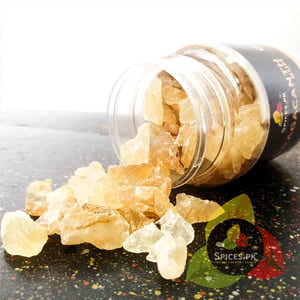
✨ Spices.pk – Authenticity you can trust. Our Bahi Murabba (Quince Preserve) is a 100% natural traditional superfood, cherished in Tibb‑e‑Nabvi for its heart‑healing and digestive properties. Trust the original, trust Spices.pk. ✨
How to Use Bahi Murabba (Quince Preserve) Traditional Pakistani Wellness Tips
🥄
After Meals for Digestion (بعد از کھانا): Take 1 small spoonful of Bahi Murabba after lunch or dinner. The natural enzymes and bioactive compounds help relieve bloating, indigestion, and acidity. This is a traditional remedy passed down through generations and is especially effective after heavy, rich meals.
🌅
On an Empty Stomach for Heart Health (نہار منہ): For those with weak hearts or those looking to strengthen their cardiovascular system, eat 1‑2 small pieces of Bahi Murabba on an empty stomach each morning. This practice is supported by Tibb‑e‑Nabvi and is a natural way to lower cholesterol, improve circulation, and prevent heart disease.
🍞
Breakfast with Paratha (ناشتے میں پراٹھا کے ساتھ): Desi households often serve Bahi Murabba at breakfast with fresh paratha. The sweet, tangy preserve adds a delicious contrast to the savoury bread and provides a gentle energy boost to start the day. It's a healthier alternative to refined jams.
🍵
Natural Sweetener for Tea or Milk (چائے یا دودھ میں): Instead of white sugar, use a spoonful of Bahi Murabba to sweeten your tea or warm milk. This adds a subtle fruity flavour and delivers the health benefits of the quince. It is especially soothing for sore throats and coughs.
🤰
Morning Sickness & Pregnancy Support (حمل میں متلی کے لیے): Pregnant women suffering from nausea and vomiting (morning sickness) can take a small spoonful of Bahi Murabba. Clinical studies have shown that quince is as effective as vitamin B6 for treating nausea and vomiting in pregnancy, and it's a natural alternative to medication.
🧊
Storage Tip (ذخیرہ کرنے کا طریقہ): Store Bahi Murabba in an airtight glass jar in a cool, dry cupboard away from direct sunlight. Once opened, keep the jar in the refrigerator to maintain freshness. Use a clean, dry spoon each time to prevent contamination. Properly stored, the murabba will last for up to 12 months.
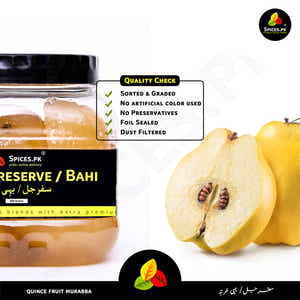
📦 Ingredients: 100% Natural Quince Fruit (Cydonia oblonga), Organic Sugar, Cardamom, Cloves, Cinnamon. No artificial colours, no preservatives, no additives, non‑GMO, gluten‑free, vegan, halal.
🚚 Order now for fast delivery across Pakistan – from Spices.pk, your premium organic spice & superfood store.
800 Grams Murabba, ayurvedic remedy, bahi, Bahi Ka Murabba Price, Bahi Murabba, bahi murabba benefits, bahi murabba for acidity, bahi murabba for cholesterol, bahi murabba for cold, bahi murabba for constipation, bahi murabba for cough, bahi murabba for diabetes, bahi murabba for digestion, bahi murabba for GERD, bahi murabba for heart, bahi murabba for immunity, bahi murabba for morning sickness, bahi murabba for nausea, bahi murabba for pregnancy, bahi murabba in urdu, balochistan quince, Behi Murabba, best bahi murabba pakistan, bihi murabba, Breakfast Spread, Buy Murabba Online, central asian fruit, chemical free, cydonia oblonga, Delicious Dessert, Desi Totkay, digestive aid, Foil Sealed, Fresh Bahi, gluten free, Gluten Free Preserve, golden apple, grandmother's remedy, hadith quince, halal preserve, Healing Foods, Healthy Digestion, heart healthy food, Herbal Remedies, homemade murabba, islamabad bahi murabba, karachi bahi murabba, kashmiri bahi, lahore bahi murabba, mesopotamian fruit, multan bahi murabba, Murabba Jat, murabba price, natural remedy, Natural Syrup, no additives, No Artificial Color, No Preservatives, Organic Food Pakistan, Organic Murabba, organic quince, Pakistan Murabba, Pansar Store, peshawar bahi murabba, premium quality, Premium Quality Murabba, prophetic medicine, Pure Quince, quetta bahi murabba, quince antioxidants, quince benefits, quince fibre, quince jam, quince nutrition, Quince Preserve, quince preserve price., quince tree, quince vitamin C, rawalpindi bahi murabba, rosaceae, Safarjal, Safarjal Benefits, Safarjal Fruit, safarjal murabba, Safarjal Preserve, silk road fruit, Sorted and Graded, spice.pk, Spices pk Murabba, spices.pk, Sunnah Food, Sweet Preserve, Tibb e Nabawi, tibb e nabvi, traditional preserve, Traditional Sweets, vegan, Vegan Sweet, Vitamin C, winter superfood, بہی کا مربہ
Spices.pk tree

Faqs

Collapsible content

Shipping

Available all over pakistan & Azad Kashmir

Payments

Online Payments & Cash on Delivery Available

Skip Details