



 Spices.pk
⚡ Accepted Payment Methods


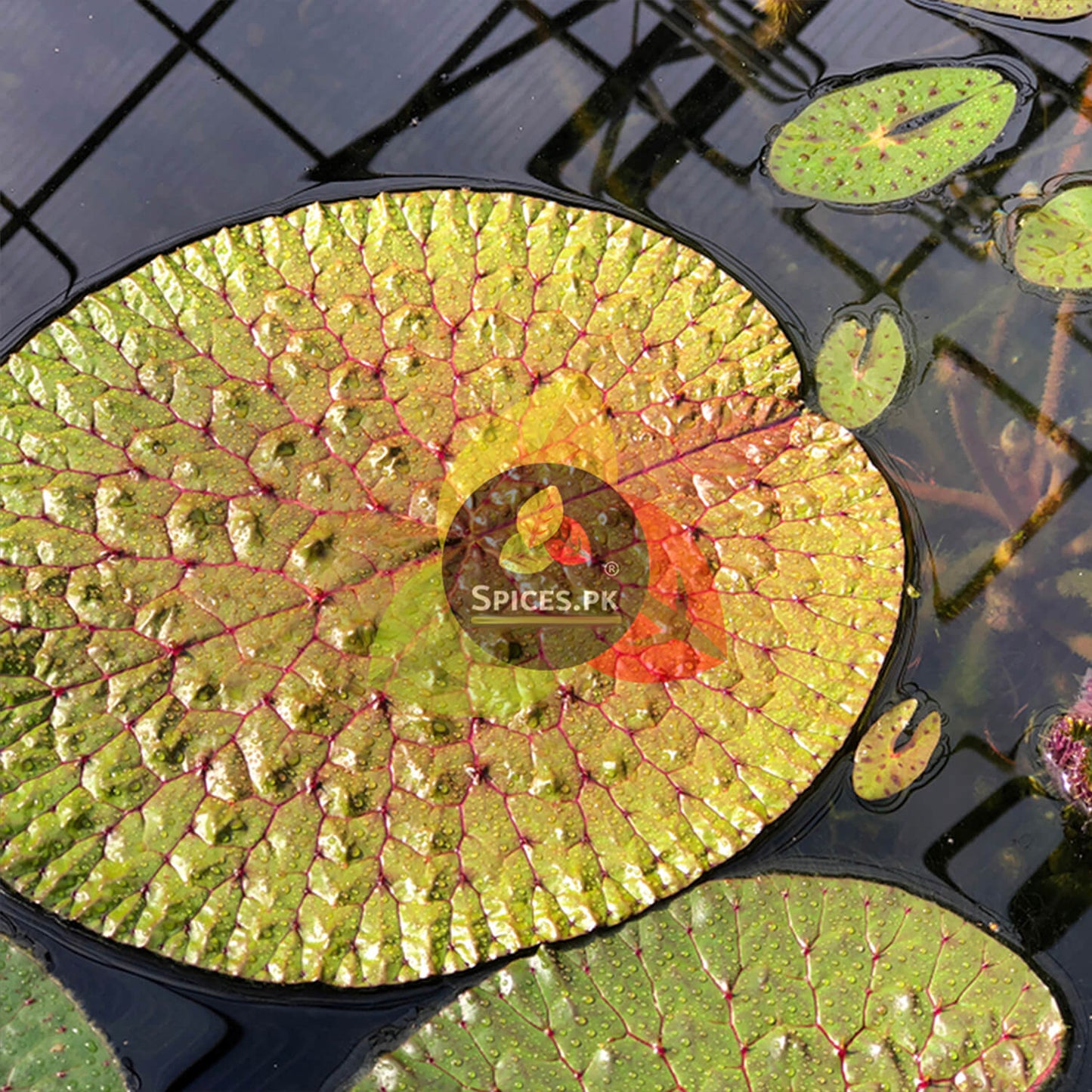
Premium Fox Nuts – Phool Makhana (پھول مکھانہ) – Natural Weight Loss Snack, High Fibre for Constipation & Rich in Calcium for Strong Bones
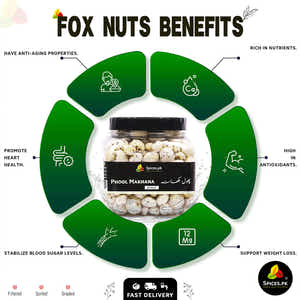
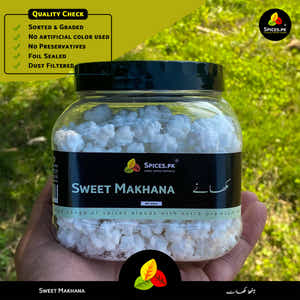
Welcome to Spices.pk, your most trusted source for 100% organic, chemical‑free spices and superfoods. Our premium Phool Makhana (پھول مکھانہ / Fox Nuts) are the popped seeds of the Euryale ferox plant, also known as the prickly water lily. Native to the shallow ponds of Asia, these light, crunchy puffs are often mistaken for lotus seeds (Nelumbo nucifera), but they are botanically distinct—and nutritionally superior. With almost zero fat (0.1g per 100g), no cholesterol, and an impressive 9.7g of protein and 14.5g of dietary fibre, Phool Makhana is the perfect guilt‑free snack. Their high fibre content acts as a natural laxative, helping to relieve constipation and regulate bowel movements. Rich in calcium (up to 60mg per 100g) and magnesium, they strengthen bones and reduce the risk of osteoporosis. The low glycemic index makes them safe for diabetics, while their potassium and magnesium content help regulate blood pressure naturally. Whether you're looking to lose weight, manage diabetes, improve your digestive health, or simply enjoy a delicious crunchy snack, Phool Makhana is the superfood your pantry needs—available fresh and pure at Spices.pk.

Fox Nuts (پھول مکھانہ)
Why Choose Spices.pk Phool Makhana (پھول مکھانہ)?

What Are Fox Nuts (Phool Makhana / پھول مکھانہ)?
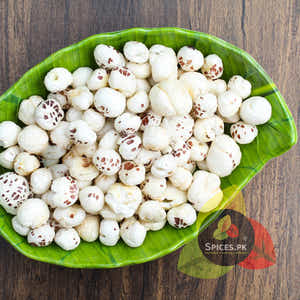
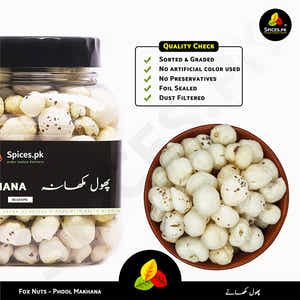
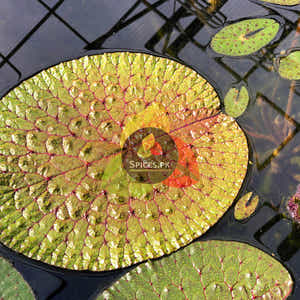
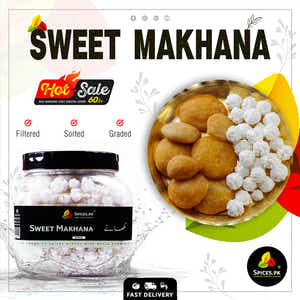
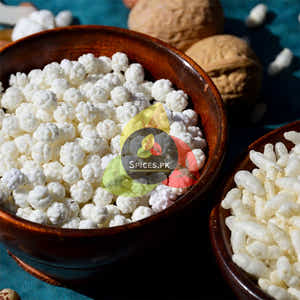
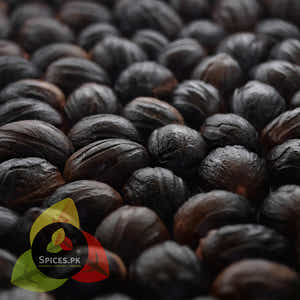
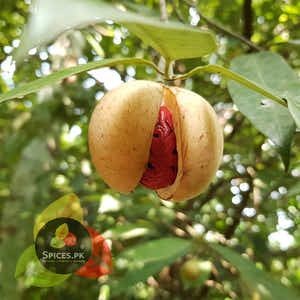
Phool Makhana, also called fox nuts or popped water lily seeds, are the edible seeds of the Euryale ferox plant—a prickly aquatic water lily native to the wetlands of South and East Asia. The plant produces large, spiny fruits the size of oranges. Each fruit contains between 20 and 40 dark seeds. When harvested, these seeds are sun‑dried, then roasted or heated. The heat causes them to pop, just like popcorn, expanding into a light, crunchy, white puff. That popped seed is the Phool Makhana you see on store shelves. The name "Phool Makhana" literally translates to "puffed makhana" in Hindi.
Though commonly mislabeled as "lotus seeds", Phool Makhana is botanically distinct. True lotus seeds come from the Nelumbo nucifera plant. Makhana belongs to the water lily family (Nymphaeaceae), the same as lotuses, but it is a different genus entirely. India produces over 90% of the world's makhana supply, with the state of Bihar being the primary centre of cultivation, especially in the Mithila region. In 2022, "Mithila Makhana" received a Geographical Indication (GI) tag from the Indian government, confirming the link between the region's unique wetland ecosystem and the quality of the makhana grown there.
In terms of nutrition, 100g of Phool Makhana provides approximately 347 calories, 9.7g of protein, 14.5g of dietary fibre, and only 0.1g of fat, with zero cholesterol and zero trans fats. It is rich in calcium (approximately 60mg), magnesium, potassium, phosphorus, iron, and zinc. The combination of high fibre and low fat makes it an exceptional snack for weight management, while its low glycemic index ensures it doesn't spike blood sugar levels, making it safe for diabetics. In Ayurveda and traditional Chinese medicine, Euryale ferox seeds have been used for centuries as a tonic, astringent, and aphrodisiac, prescribed for renal disorders, chronic diarrhoea, excessive leucorrhea, and as a general rejuvenative.
A 5,000‑Year Legacy: The Ancient History of Fox Nuts
The history of Euryale ferox dates back over 5,000 years. Archaeological evidence indicates that fox nuts were a frequently collected wild food source during the Neolithic period in the Yangtze River region, with large numbers of finds coming from the sites of Kuahuqiao, Hemudu, and Tianluoshan. The earliest recorded use of Euryale ferox as a medicinal herb is in the Shennong Bencaojing (The Divine Farmer's Materia Medica), one of the oldest pharmacopoeias in the world, compiled around 200‑250 AD. In China, the seed is called "qian shi" (芡实) and has been used in traditional Chinese medicine for centuries to treat chronic diarrhoea, excessive leucorrhea, and as a kidney tonic.
In South Asia, Euryale ferox grows abundantly in the freshwater lakes and ponds of Bihar, Assam, Manipur, and Kashmir. The seeds have been used in Ayurveda and Unani medicine for centuries as a tonic, astringent, deobstruent, and aphrodisiac. They are prescribed for dysmenorrhoea, restraining seminal gleet, and rheumatism. In the Mithila region of Bihar, makhana is so culturally significant that it is considered one of three prestigious identities of the region: "Pond, Fish and Makhan" (Maithili: पग-पग पोखर, माछ, मखान). Makhana is also used in the Kojagara festival, celebrated for newly married couples among the Maithil Brahmins and Kaysaths. Today, India accounts for over 90% of global makhana exports, exporting approximately 25,130 tonnes annually, with the USA, Canada, UAE, and the UK being the top importers. Nepal, China, Thailand, and Bangladesh also produce and export smaller quantities.


























































































































































































Faqs


