



 Spices.pk
⚡ Accepted Payment Methods


Premium Sandalwood Powder – Sandal Powder (صندل پاؤڈر) – 100% Natural Chandan for Skin Brightening, Acne Control, Anti-Ageing & Calming Aromatherapy
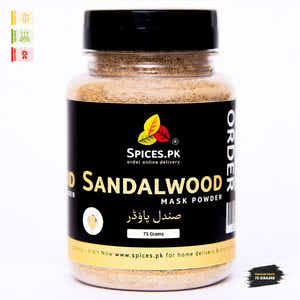
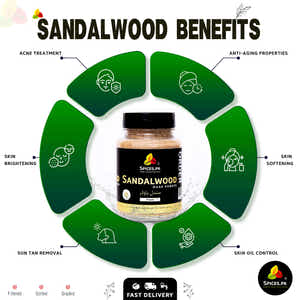
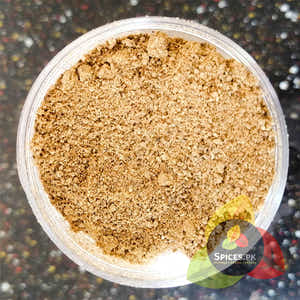
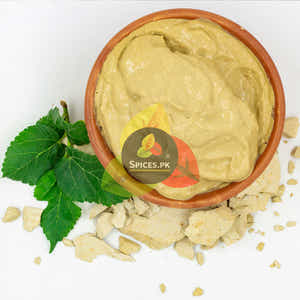
Welcome to Spices.pk, your most trusted source for 100% natural, chemical‑free beauty and wellness essentials. Our premium Sandalwood Powder – Sandal Powder (صندل پاؤڈر) – also known as Chandan is a finely ground powder derived from the fragrant heartwood of the sandalwood tree (Santalum album). Revered in Ayurveda, Unani, and traditional medicine for over 5,000 years, Chandan is celebrated for its extraordinary cooling, antiseptic, and anti‑inflammatory properties. Rich in natural antioxidants and essential oils, our pure sandalwood powder helps brighten skin tone, fade dark spots and pigmentation, treat acne, and reduce the appearance of fine lines and wrinkles. Its woody, sweet, and grounding aroma is a natural stress reliever, used for centuries in meditation and religious rituals. 100% pure, unadulterated, and halal, our sandalwood powder is freshly packed in Pakistan, bringing the ancient healing power of sandalwood directly to your home. Mix it with rose water, honey, or milk to create luxurious face masks, body scrubs, and hair treatments.(NOT for Eating)

Sandalwood Powder
Why Choose Spices.pk Sandalwood Powder (Sandal Powder)?

What Is Sandalwood Powder (صندل پاؤڈر / Chandan)?
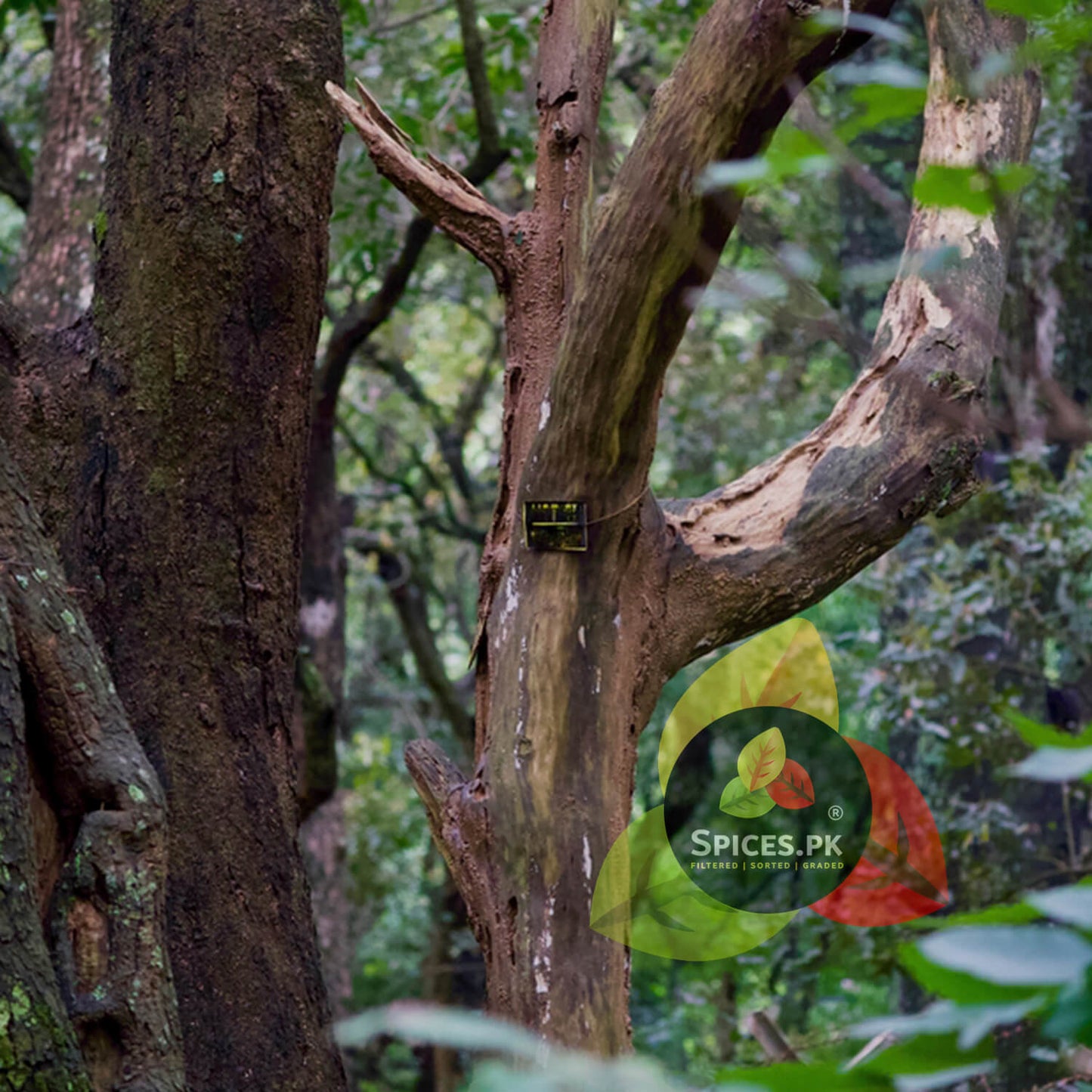
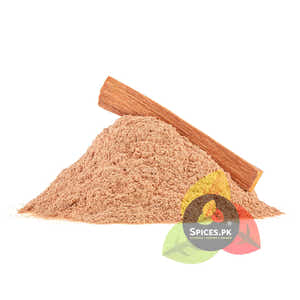
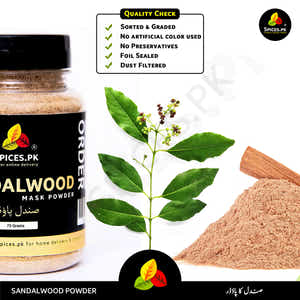
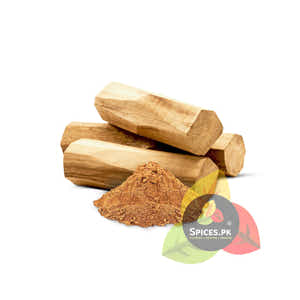
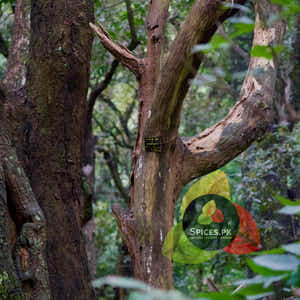
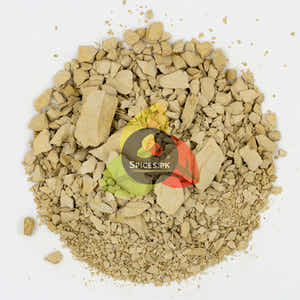
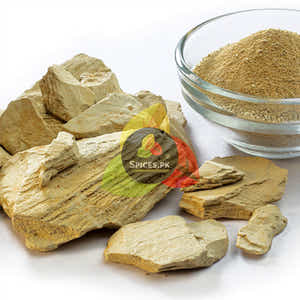
Sandalwood powder, known in Urdu as Sandal Powder (صندل پاؤڈر) or Chandan, is a finely ground powder made from the heartwood of the sandalwood tree (Santalum album). The name “Chandan” is derived from the Sanskrit word “Chandana”, meaning “wood for burning incense”. The sandalwood tree is a small tropical evergreen, and it is one of the most expensive woods in the world due to its slow growth (it takes 15‑20 years to be harvestable) and the unique, long‑lasting fragrance of its oil. The tree is a hemiparasite, meaning it cannot thrive on its own and must be planted near a host tree. The heartwood is the most valuable part, prized for its intense, sweet, woody scent, which can last for decades.
Our sandalwood powder is 100% pure and natural. The finest sandalwood comes from the Indian subcontinent and is highly valued for its high alpha‑santalol content, which gives it a warm, velvety, and milky scent. The Indian sandalwood tree (Santalum album) was first introduced to South Asia by Austronesian sailors during the ancient spice trade, with evidence of its use in the Indus Valley and Dravidian cultures dating back to at least 1500 BCE. The tree is now widely naturalised in South India, particularly in the Western Ghats, Kalrayan, and Shevaroy Hills. The wood is ground into a fine powder, which is then used for making face masks, cosmetics, incense, medicine, and soaps. The isomers of sandalwood oil are also used in aromatherapy products.
Medicinally, sandalwood powder is renowned for its antiseptic, anti‑inflammatory, antioxidant, astringent, and cooling properties. It is a rich source of natural antioxidants and essential oils. In Ayurveda, it is considered “Sheetala” (cooling), “Vishagna” (detoxifying), and “Tridosha” (balancing all three doshas). In Unani medicine, it is a “Muqawwi‑e‑Qalb” (cardiac tonic) and a “Mufarreh” (exhilarant). Its versatility makes it an essential ingredient in natural beauty and wellness routines.
A 5,000‑Year Legacy: The History of Sandalwood
The history of sandalwood is as old as civilisation itself, spanning over 5,000 years and crossing continents. The Santalum genus of trees is native to the islands of Southeast Asia and Australia, but the species Santalum album was first introduced to mainland Asia by Austronesian sailors during the ancient maritime spice trade, becoming naturalised in South India by at least 1300 BCE. The earliest written records of sandalwood’s use come from the Rigveda and the Charaka Samhita, where it is listed among 129 mono‑herbal drugs in the Ayurvedic text. Sandalwood is mentioned in the Sushruta Samhita as a treatment for “daha” (a burning sensation), often associated with drinking too much alcohol, which involved cooling baths.
Sandalwood has been a precious commodity for over 3,000 years, fuelling “sandalwood rushes” into the 20th century. Its value was so high that it was traded along the Silk Road and was one of the most expensive goods in the world. The wood was used in sacred buildings in India, and the gates of the Somnath Temple in Gujarat were carved from sandalwood. During the Mughal era, sandalwood was used in royal perfumery and in traditional beauty regimes, often mixed with Multani Mitti and rose water to create “ubtan”, the pre‑wedding face pack. In the Unani tradition, sandalwood was prescribed as a remedy for inflammation, digestive disorders, and as a cardiac tonic.
Today, sandalwood is grown in government‑owned plantations in India, with the state of Karnataka having the world’s largest Sandalwood Reserve Forests. Sandalwood oil is heavily priced, estimated at around 65,000 rupees per kg. Australia has now overtaken India as the world’s largest producer of sandalwood, with the majority of its exports going to China and India. The global market for sandalwood powder was valued at US$ 1.2 billion in 2024 and is projected to reach US$ 2.5 billion by 2033. It remains one of the most sought‑after woods in the world. In Pakistan, sandalwood has been used for centuries in religious ceremonies, as a paste for the forehead (tilak), as a cooling agent, and as a beauty ingredient. The tradition of using sandalwood powder in face masks is still practiced in many households today.



















































































































































Faqs


