Skip to product information
1 of 5
Daraz
Brand Logo Spices.pk
Kamarkas - Chunia Resin - Forest ResinSamagh Al Palas - Butea Gum - Butea Monosperma Gum - Chuniya
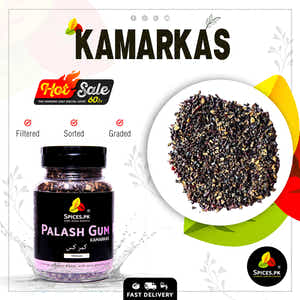
Palash Gum - Kamarkas (کمرکس )
Whole - Pansar
0 only
Trust & Payment — Enhanced Visuals
Free Shipping
Orders over 2000 PKR
Secure Payment
256-bit SSL & fraud protection
24/7 Support
via WhatsApp & chat

⚡ Accepted Payment Methods

  • Visa
  • Mastercard
  • PayPal
✅ Trusted by 10,000+ customers · PCI compliant
SKU: 51214078512142
Barcode: 51214078512142
View full details

Premium Palash Gum – Kamarkas (کمرکس) – Traditional Gum Resin for Sweet Preparations & Culinary Heritage | 100% Natural Butea Monosperma

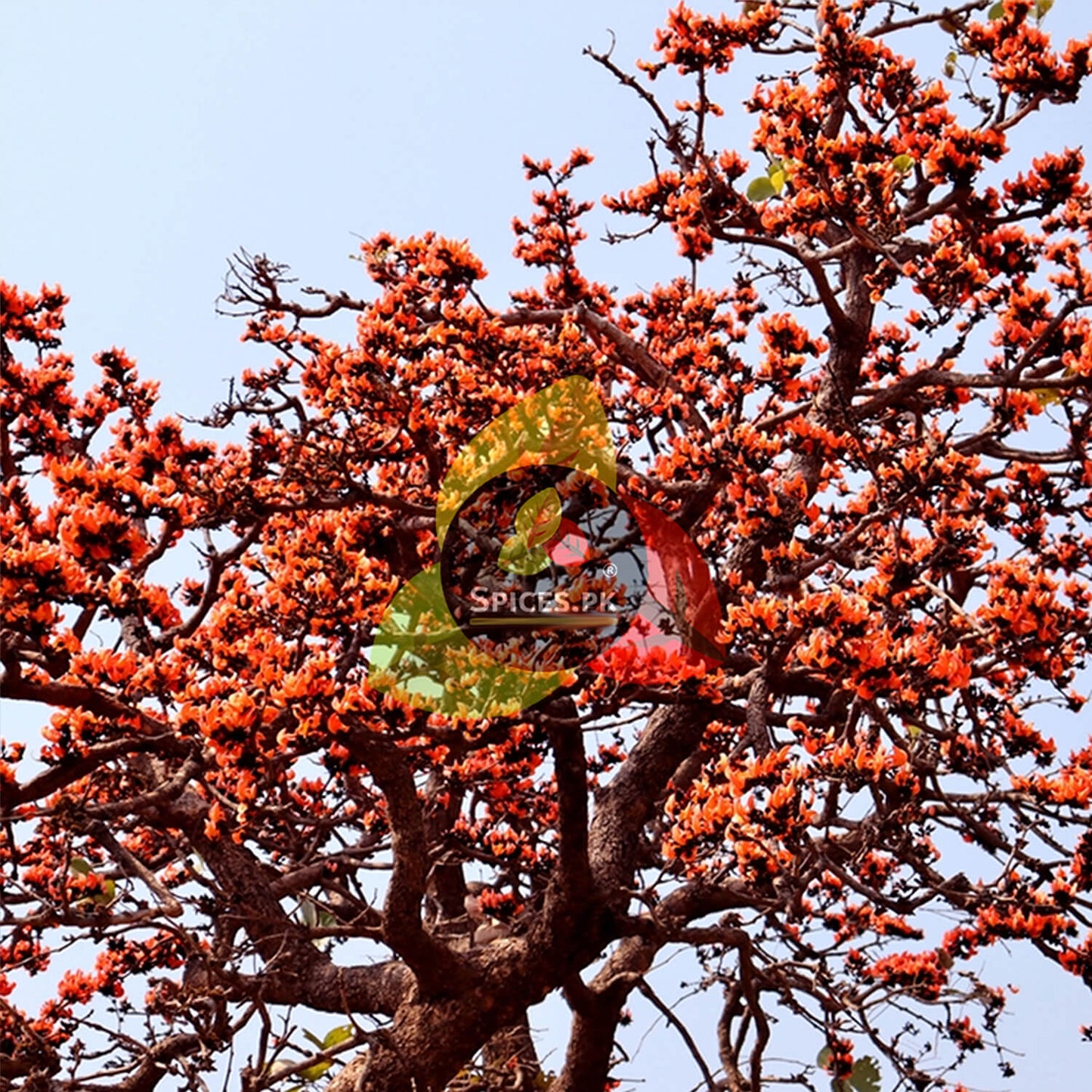
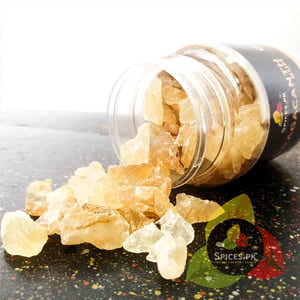
Welcome to Spices.pk, your most trusted source for 100% natural, chemical‑free spices and superfoods. Our premium Kamarkas (کمرکس) – also known as Palash Gum, Gond Chunia, or Bengal Kino is a reddish‑black gum resin obtained from the bark of the Palash tree (Butea monosperma), the legendary "Flame of the Forest" that lights up South Asian landscapes with its brilliant orange‑red flowers. For centuries, this natural gum has been used in traditional sweet preparations like laddoos and Panjiri, especially in South Asian culinary heritage. The name "Kamarkas" literally means "tightening of the waist" – a nod to its traditional use in strengthening preparations. The gum naturally contains tannins, flavonoids, glycosides, and other plant compounds. It also provides naturally occurring vitamin K, calcium, and iron. Whether you are exploring traditional Pakistani recipes, making festive sweets, or looking for authentic natural ingredients, our Kamarkas brings the timeless culinary wisdom of South Asia straight to your kitchen. Hand‑harvested from wild Butea trees in Pakistan, India, and Nepal, our Kamarkas is 100% pure, unadulterated, and free from any artificial additives.

Premium Palash Gum – Kamarkas – Traditional Gum Resin for Sweet Preparations – Spices.pk

Palash Gum (کمرکس)

Why Choose Spices.pk Kamarkas (Palash Gum)?

🌿100% Natural & Chemical‑Free – No preservatives, no artificial colours; pure wild‑harvested gum
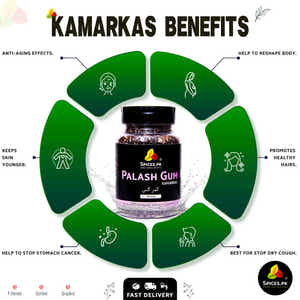
💪Rich in Plant Compounds – Naturally contains tannins, flavonoids, and glycosides
🥣Traditional Culinary Use – Essential ingredient in Panjiri and festive laddoos
🦴Natural Source of Minerals – Contains calcium, vitamin K, and iron
🕌Halal Certified – Pure, safe, and authentic for all households
♻️Ethically Sourced & Freshly Packed – Sustainably harvested from wild trees, hygienically packed
Kamarkas – traditional uses and nutritional highlights

What Is Kamarkas (کمرکس / Palash Gum)?

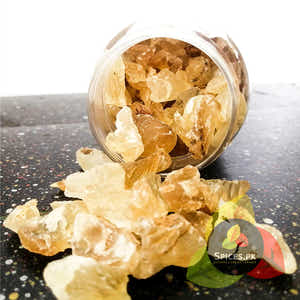
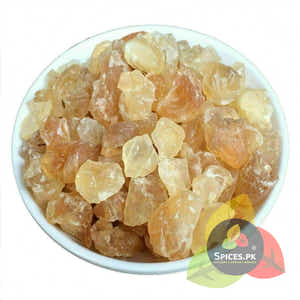
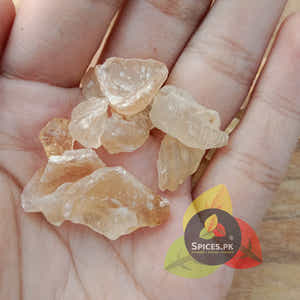
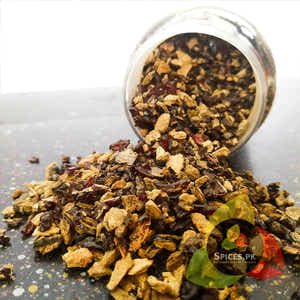
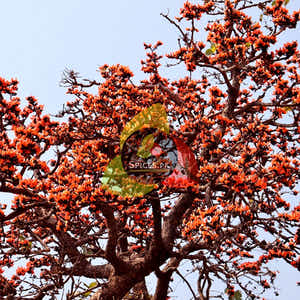
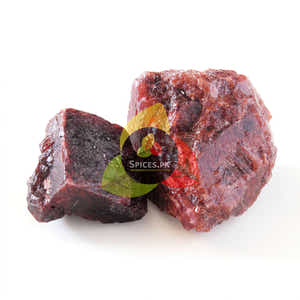
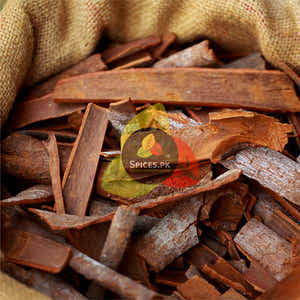
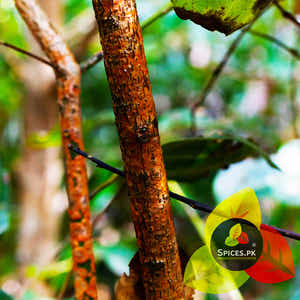
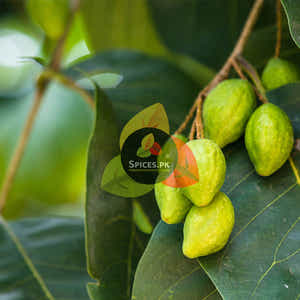
Kamarkas, also known as Palash Gond, Gond Chunia, Bengal Kino, or Butea Gum, is a natural gum resin exuded from the bark of the Palash tree (Butea monosperma). The name "Kamarkas" comes from two Urdu words: "kamar" (waist) and "kas" (tightening), referring to its traditional use in strengthening preparations. The Palash tree, commonly called the "Flame of the Forest" for its spectacular orange‑red flowers, is a medium‑sized deciduous tree native to tropical South Asia, ranging across Pakistan, India, Bangladesh, Nepal, Sri Lanka, Myanmar, Thailand, Laos, Cambodia, Vietnam, Malaysia, and western Indonesia. The tree belongs to the Fabaceae (legume) family and is deeply woven into the cultural and culinary traditions of the subcontinent. The gum is obtained by making incisions in the bark, from which a milky reddish sap oozes out and hardens into irregular, glassy, reddish‑black tears or flakes. These are then cleaned, sorted, and packaged.
Chemically, Kamarkas contains tannins, flavonoids, glycosides, kinotannic acid, gallic acid, and other polyphenolic compounds. Nutritionally, Kamarkas provides a modest amount of protein (0.1g per teaspoon), carbohydrates (0.4g per teaspoon), and very little fat, along with naturally occurring micronutrients: 1 teaspoon provides vitamin K, calcium, manganese, and iron. These nutrients are part of this traditional natural gum's wholesome profile.

In traditional South Asian culinary practices, Kamarkas is primarily incorporated into sweet preparations like laddoos and Panjiri, which have been made for generations in Pakistani and Indian households. These festive sweets are especially popular during winter months and celebratory occasions. The gum is valued for its unique texture and its ability to bind ingredients together while adding a subtle earthy flavour. At Spices.pk, we bring you the highest quality, hand‑cleaned Kamarkas, packed fresh to preserve its natural qualities.

A 2,000‑Year Cultural Legacy: The History of Kamarkas

The history of Kamarkas is inseparable from the Palash tree, which has been revered in South Asian culture for over two millennia. The first known mention of the Palash tree appears in the Sukla Yajurveda, one of the four sacred texts of Hinduism, where the branch of the Palasa tree is used by the Adhvaryu priest in sacrificial rituals. The tree is also mentioned in the Charaka Samhita and Sushruta Samhita (dated to around 600‑300 BCE), the foundational texts of Ayurveda, where the flowers, seeds, bark, and gum are described.

The tree's cultural importance grew during the Mughal era (16th–19th centuries), when the Unani system of medicine – brought to South Asia by Persian and Central Asian physicians – flourished. Unani scholars adopted Palash gum into their pharmacopoeia under the name "Gond Chuniya" or "Samagh‑i‑Kuniyyah." The tradition of making Kamarkas laddoos for special occasions became widespread during this period, and it is also at this time that the name "Kamarkas" (کمرکس) – "tightening of the waist" – became the common Urdu and Hindi name for the gum.

Today, the Palash tree grows wild across the arid and semi‑arid regions of the Indian subcontinent. India remains the largest producer and exporter, with the gum being hand‑tapped by tribal communities, particularly the Saharia community in Central India. However, Pakistan also produces Kamarkas from wild Palash trees found in Punjab, Khyber Pakhtunkhwa, and Sindh. The global market for natural gums and resins has grown steadily, with increasing demand from both traditional culinary circles and modern food enthusiasts. Whether used in traditional laddoos or as a unique ingredient in experimental cooking, Kamarkas continues to be valued for its remarkable culinary heritage.
🏷️Traditional Names & Languages (South Asia)
  • 🇵🇰🇮🇳 Urdu / Hindi: کمرکس / कमरकस (Kamarkas) / گوند چنیا (Gond Chunia)
  • 🇮🇳 Sanskrit: किंशुक (Kinshuk) / पलाश (Palash)
  • 🇮🇳 Bengali: কিনাকা (Kinaka) / পালাশ (Palash)
  • 🇮🇳 Punjabi: ਕਿੰਸ਼ੁਕ (Kinshuk)
  • 🇮🇳 Gujarati: કેસુદો (Kesudo)
  • 🇮🇳 Tamil: பூவரசு (Poovarasu)
  • 🇮🇳 Telugu: మోదుగ (Moduga)
  • 🇮🇳 Kannada: ಮುತ್ತುಗ (Muttuga)
  • 🇮🇳 Malayalam: പ്ലാസു (Plasu)
🌐Global Names & Botanical Classification
  • 🇬🇧 English: Palash Gum / Bengal Kino / Butea Gum / Flame of the Forest Gum
  • 🌿 Botanical Name: Butea monosperma (Lam.) Taub.
  • 🌸 Family: Fabaceae (Legume family)
  • 🇩🇪 German: Malabarischer Lackbaum
  • 🇫🇷 French: Gomme de Bengal
  • 🇪🇸 Spanish: Goma de Bengal
  • 🇨🇳 Chinese: 紫礦脂 (Zǐkuàng zhī)
  • 🇦🇪 Arabic: صمغ البنغال
📜Nutritional & Culinary Highlights
✔ Contains naturally occurring plant compounds: tannins, flavonoids, glycosides, kinotannic acid, and gallic acid.
✔ A natural source of vitamin K, calcium, and iron.
✔ Traditionally used in sweet preparations like Panjiri and laddoos.
✔ Adds unique texture and binding properties to festive sweets.
✔ Valued in South Asian culinary heritage for its earthy, subtle flavour.
📌Natural Plant Compounds
Kamarkas contains naturally occurring tannins, flavonoids, and glycosides. These are plant compounds found in many natural gums and resins. They contribute to the gum's unique colour and binding properties when used in traditional sweet preparations.
📌Natural Mineral Content
Kamarkas provides naturally occurring vitamin K, calcium, and iron. A single teaspoon provides a portion of the daily value of these nutrients, making it a wholesome addition to traditional recipes like laddoos and Panjiri.
📌Traditional Culinary Uses
Kamarkas is primarily used in traditional South Asian sweet preparations. It is a key ingredient in Panjiri – a nourishing sweet mix made with flour, ghee, sugar, and nuts – and in festive laddoos. The gum is roasted in ghee until it puffs up, then combined with other ingredients to create a unique texture and flavour.
🗺️Top Producing Countries (Palash Gum, 2025)
🇮🇳 India – world's largest producer and exporter of Kamarkas (Butea monosperma gum), with major production in Central India (Madhya Pradesh, Chhattisgarh, Odisha). 🇵🇰 Pakistan – significant producer from wild Palash trees in Punjab (Jhelum, Rawalpindi, Attock), Khyber Pakhtunkhwa, and Sindh. 🇳🇵 Nepal – produces for domestic use and export. 🇧🇩 Bangladesh – small‑scale production. 🇱🇰 Sri Lanka – limited production. The global supply is limited because the tree is not commercially cultivated; the gum is hand‑harvested exclusively from wild trees.
📤Top Exporters (Palash Gum / Kamarkas, 2024‑2025)
  • 🇮🇳 India – largest exporter, exporting raw Kamarkas gum to Pakistan, the Middle East (UAE, Saudi Arabia, Kuwait), Europe, and North America.
  • 🇵🇰 Pakistan – second largest, exporting to the Middle East, United Kingdom, and the United States.
  • 🇳🇵 Nepal – exports small volumes to India and the United States.
  • 🇧🇩 Bangladesh – limited exports to India.
  • 🇦🇪 UAE – re‑export hub for the Middle Eastern market.
Historical Background: From the Vedas to the Mughal Dastarkhwan
The Palash tree is one of the most sacred trees in South Asian culture. The first sloka of the Sukla Yajurveda describes the Palasa branch being used in sacrificial rituals. In the Ramayana, the forest where Rama, Sita, and Lakshmana spent a portion of their exile was described as a dense Palash forest. The tree is also mentioned in the Mahabharata and the Puranas. During the Mughal era, Unani physicians added Palash gum to their pharmacopoeia. It was during this period that the gum's use in traditional sweet preparations became firmly established, earning it the name "Kamarkas." Today, despite modernisation, Palash trees continue to be harvested using the same traditional methods – local communities make small incisions in the bark, collect the hardened gum tears by hand, and process them with care, keeping the ancient culinary wisdom alive.
✨ Spices.pk – Authenticity you can taste. Our Kamarkas (Palash Gum) is wild‑harvested, 100% natural, and perfect for traditional sweet preparations. Trust the original, trust Spices.pk. ✨
How to Use Kamarkas (Palash Gum) Traditional Pakistani Kitchen Tips
🥣
Kamarkas Laddoo – Traditional Festive Recipe: Grind 2 tablespoons of Kamarkas into a coarse powder. In a pan, heat 2 tablespoons of ghee. Fry the Kamarkas powder for 30 seconds until it puffs up. Add 1 cup of whole wheat flour and roast on low heat until golden brown. Add ½ cup of powdered jaggery or sugar, 2 tablespoons of crushed almonds and cashews, and 1 teaspoon of cardamom powder. Mix well. When cool enough to handle, shape into small laddoos. Store in an airtight container. Enjoy 1‑2 laddoos as a traditional festive treat.
🥤
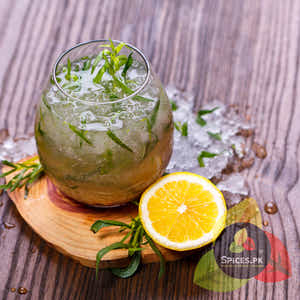
Kamarkas Infusion (For Culinary Use): Bring 2 cups of water to a boil. Add 1 teaspoon of Kamarkas flakes or powder. Simmer for 5‑7 minutes until the water reduces to half. Strain into a cup. Add a pinch of jaggery or honey to taste. Enjoy this warm infusion as a traditional beverage.
🥛
Kamarkas Milk (Traditional Nourishing Drink): Grind ½ teaspoon of Kamarkas into a fine powder. Add to 1 cup of warm milk. Stir well and add a pinch of jaggery or honey if desired. Drink at night before bed as part of a traditional winter routine.
💇♀️
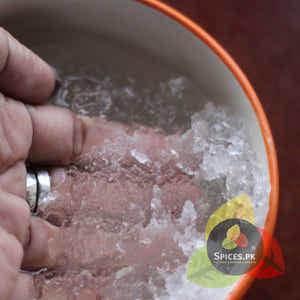
Traditional Hair Rinse (Kamarkas Infusion): Soak 1 tablespoon of Kamarkas flakes in 2 cups of water for 2‑3 hours (or overnight). Strain the liquid (which will have turned reddish‑brown). Use it as a final rinse after shampooing. Massage the infusion into the scalp and through the length of the hair. This traditional hair care practice is valued for its natural properties.
🧴
Kamarkas Paste (Topical Use): Grind Kamarkas into a fine powder. Mix with rose water or milk to form a smooth paste. Apply to the skin for 15‑20 minutes as part of a traditional skincare routine. Rinse with warm water.
🧊
Storage Tip (ذخیرہ کرنے کا طریقہ): Store Kamarkas in an airtight glass jar in a cool, dark cupboard away from direct sunlight and moisture. Do not refrigerate, as condensation can degrade the quality. Properly stored, the gum retains its quality for up to 24 months.
📦 Ingredients: 100% Natural Wild‑Harvested Palash Gum (Butea monosperma). No additives, no preservatives, non‑GMO, gluten‑free, vegan, halal.
🚚 Order now for fast delivery across Pakistan – from Spices.pk, your premium organic spice & superfood store.
Spices.pk tree
Spices.pk | Premium Spices Banner – Desktop Only

Faqs

Collapsible content

✅ Are your spices 100% organic and pure?
Absolutely! We source directly from organic farmers in Pakistan and abroad. All our products – from Organic Turmeric Powder (Haldi) to Black Seeds (Kalonji) – are certified organic, no artificial colours, no preservatives, and no fillers. We regularly test for purity and heavy metals.
💰 Do you offer Cash on Delivery (COD) in Pakistan?
Yes! We offer Cash on Delivery to all cities in Pakistan, including Karachi, Lahore, Islamabad, Rawalpindi, Faisalabad, Multan, Peshawar, Quetta, and even remote areas. COD is free – you pay only when you receive your order.
🚚 How long does shipping take?
We process orders within 24 hours (except Sunday/holidays). Major cities: 2‑3 business days. Other cities: 3‑5 business days. Remote areas: up to 7 business days. You'll receive a tracking number via SMS/email once shipped.
🔄 What is your return / refund policy?
If you receive a damaged or wrong product, contact us within 7 days of delivery. We'll arrange a replacement or full refund (no extra cost). For unopened, resalable items you can return within 7 days (buyer pays return shipping). Refunds processed in 5‑7 business days.
📦 Can I buy spices in bulk or wholesale?
Yes! We supply hotels, restaurants, bakeries, and online resellers. For wholesale pricing on 1kg, 5kg, or 25kg packs, email us at contact@spices.pk or use our contact form. We also offer custom private labelling.
🌟 What makes your spices different from local market spices?
Most local market spices contain fillers or artificial colours. We provide single‑origin, lab‑tested spices with full traceability. Our Red Chilli Powder is 100% pure without brick powder or dye. Our Cinnamon Sticks have high essential oil content – you can taste the difference.
🔒 Is your packaging resealable and hygienic?
Yes! All our spices come in food‑grade, BPA‑free stand‑up pouches with zip‑lock. This keeps your spices fresh for months and prevents spilling. The packaging also includes batch number, expiry date, and storage instructions.
🌍 Do you ship internationally?
Currently we ship only within Pakistan (including AJK and Gilgit‑Baltistan). We plan to launch international shipping soon. For international customers, please ask a friend/relative in Pakistan to order on your behalf.
💳 Which payment methods do you accept?
We accept Cash on Delivery, credit/debit cards (Visa, Mastercard, Amex), EasyPaisa, JazzCash, and bank transfer for bulk orders. All online payments are PCI‑compliant – your card data is never stored on our servers.
🕌 Are your products Halal certified?
Yes – 100% Halal. We do not use any alcohol‑based processing, gelatin, or non‑halal ingredients. Many of our spices (e.g., Gond Katira, Kalonji) are used in traditional Islamic medicine. Halal certificate available on request.
🧴 How should I store spices to keep them fresh?
Store in a cool, dark, dry place (avoid above stove or near window). Keep the zip‑lock sealed. Whole spices last up to 2 years; ground spices best within 6‑8 months. Never use a wet spoon – moisture ruins them.
🍲 Do you sell whole spices, powders, or both?
We sell both! For each spice we usually offer whole, powder, and sometimes crushed/flakes. Check the product dropdown for options. Whole spices last longer; powders are more convenient.
Skip Details